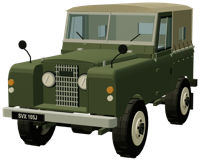
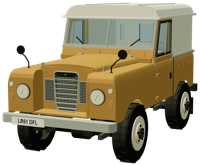
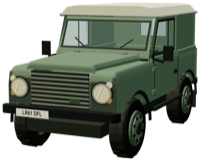
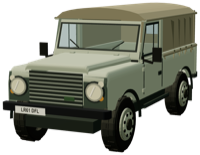
The 80 Series replaced the 60 in January 1990 with coil springs on both solid axles, a wider body, and in most markets full-time four-wheel drive with a centre differential lock; front and rear locking differentials were an option. The 4.0-litre 3F-E gave way to the 4.5-litre twin-cam 1FZ-FE in 1992, and the 4.2-litre 1HD-T turbo-diesel served Australia, Europe and the Middle East.
Toyota’s two-millionth Land Cruiser was built during the 80’s run, and its axle articulation and locking differentials made it the standard for Australian touring and for United Nations fleets in Africa. The 100 Series replaced it in 1998; Venezuela built the 80 until 2007.
3F-E and the coil-sprung chassis (1990–1992)
1 VEHICLE IN THIS CHAPTERThe first 80s carried the 155 hp 3F-E petrol or the 1HZ and 1HD-T diesels, a five-speed manual or four-speed automatic, and the coil-sprung solid axles that defined the model. Part-time four-wheel drive with free-wheeling hubs remained on base diesels for some markets.
Registry records · chapter 1

1FZ-FE and the Lexus LX 450 (1992–1997)
2 VEHICLES IN THIS CHAPTERThe 4.5-litre 1FZ-FE of 1992 gave 212 hp; airbags, anti-lock brakes and a Lexus LX 450 version for the United States followed in 1996. Japanese production ended in December 1997.
Registry records · chapter 2
Base models
The structural configurations the registry and the Creator build from; each page carries the researched specification.Sources
- Toyota Land Cruiser — Wikipedia
- 75 Years of Toyota — vehicle lineage — Toyota Motor Corporation
- Toyota Land Cruiser (J80) — Wikipedia