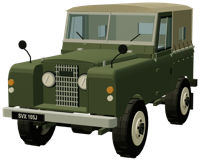
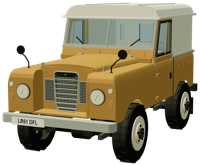
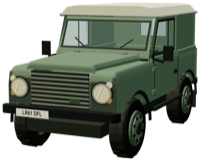
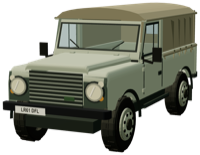
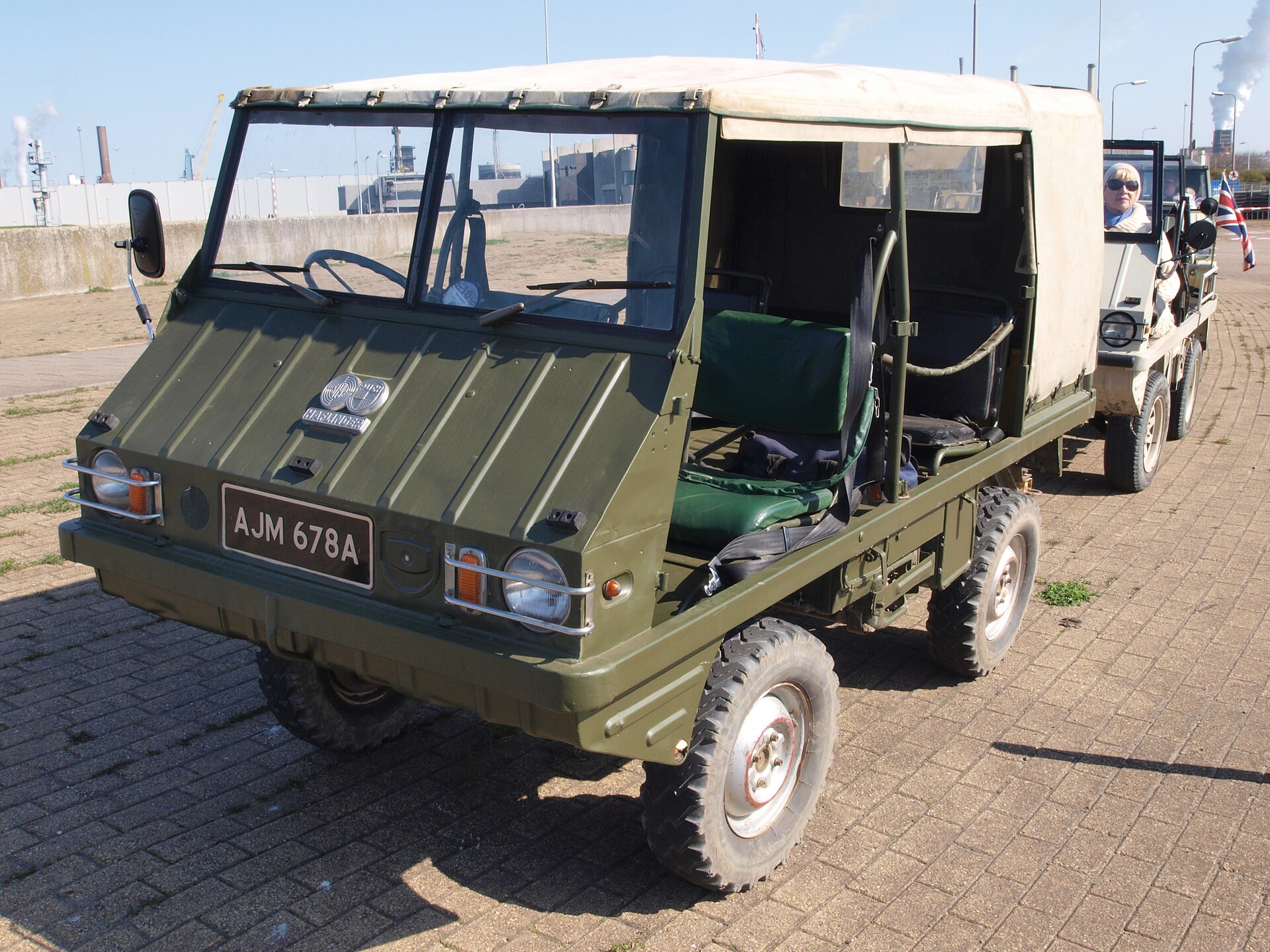
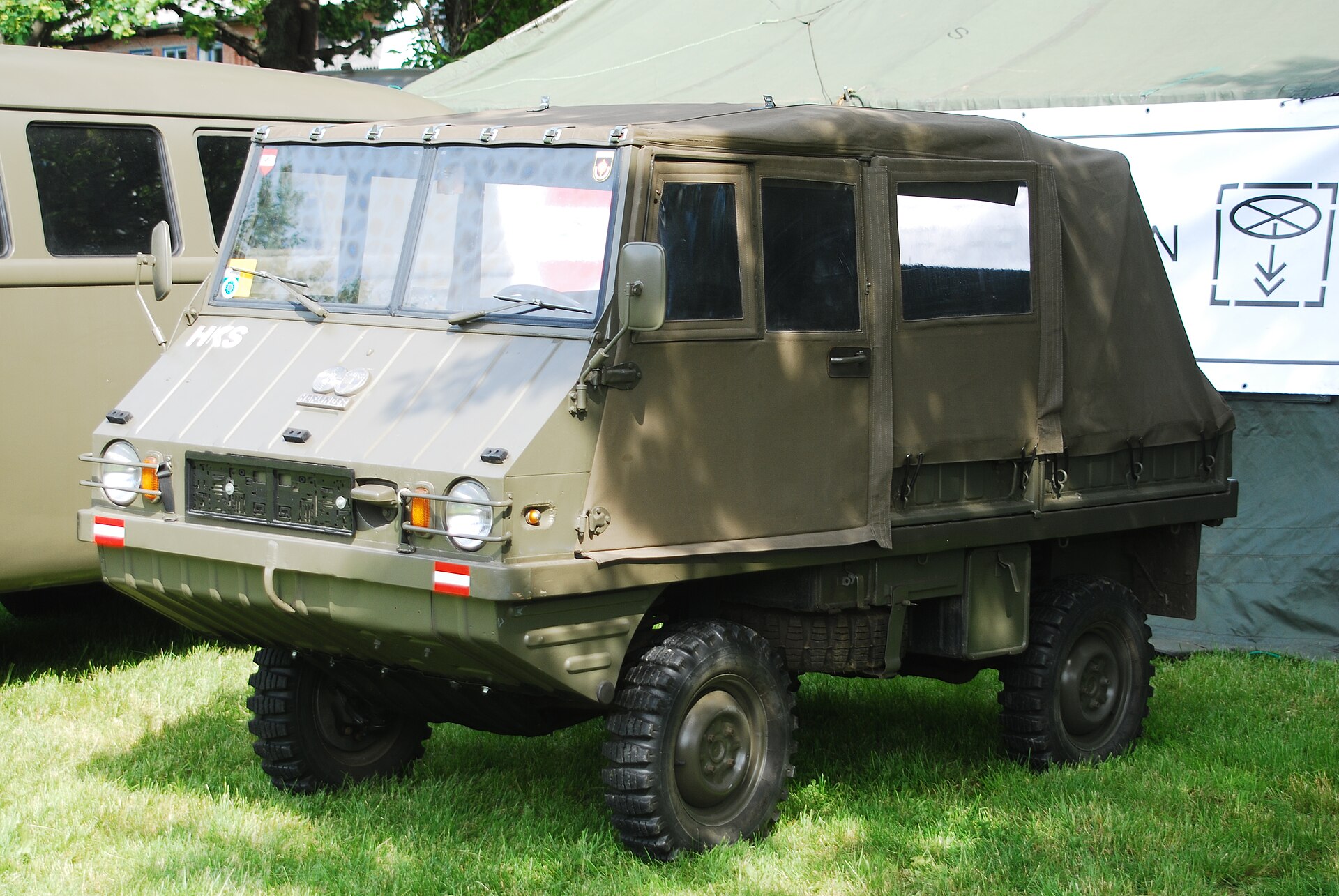
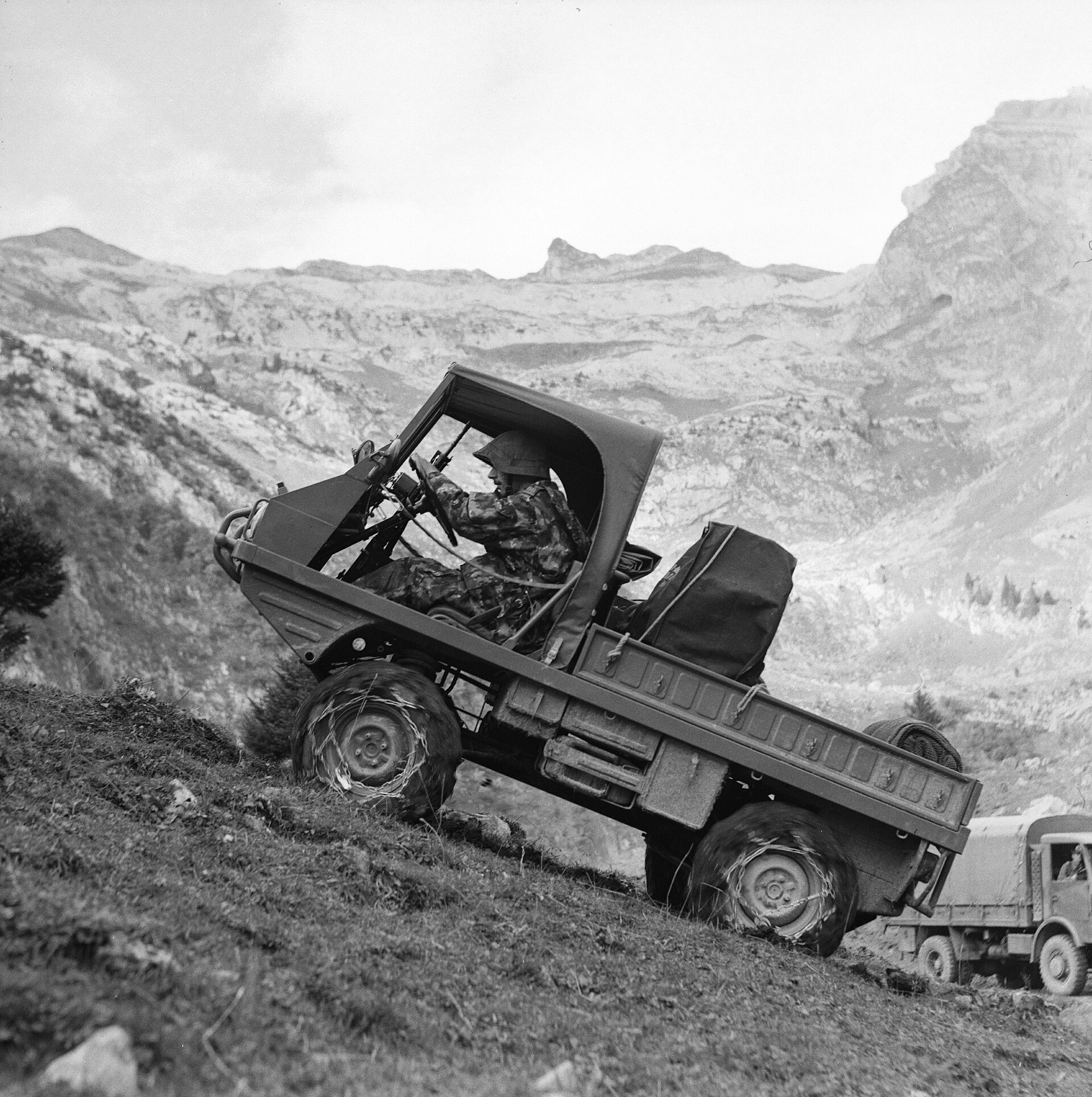
The Austrian Army asked in 1958 for a light vehicle for mountain infantry and Steyr-Daimler-Puch’s Erich Ledwinka answered with his father’s Tatra principles in miniature: a central tube frame, independent swing axles with portal hubs for 240 mm of clearance, front and rear locks and the air-cooled twin of the Puch 500 at the back. Series I of 1959–67 had 22 hp and four speeds, Series II of 1967–74 27 hp and five; the 1,800 mm long wheelbase joined the 1,500 mm.
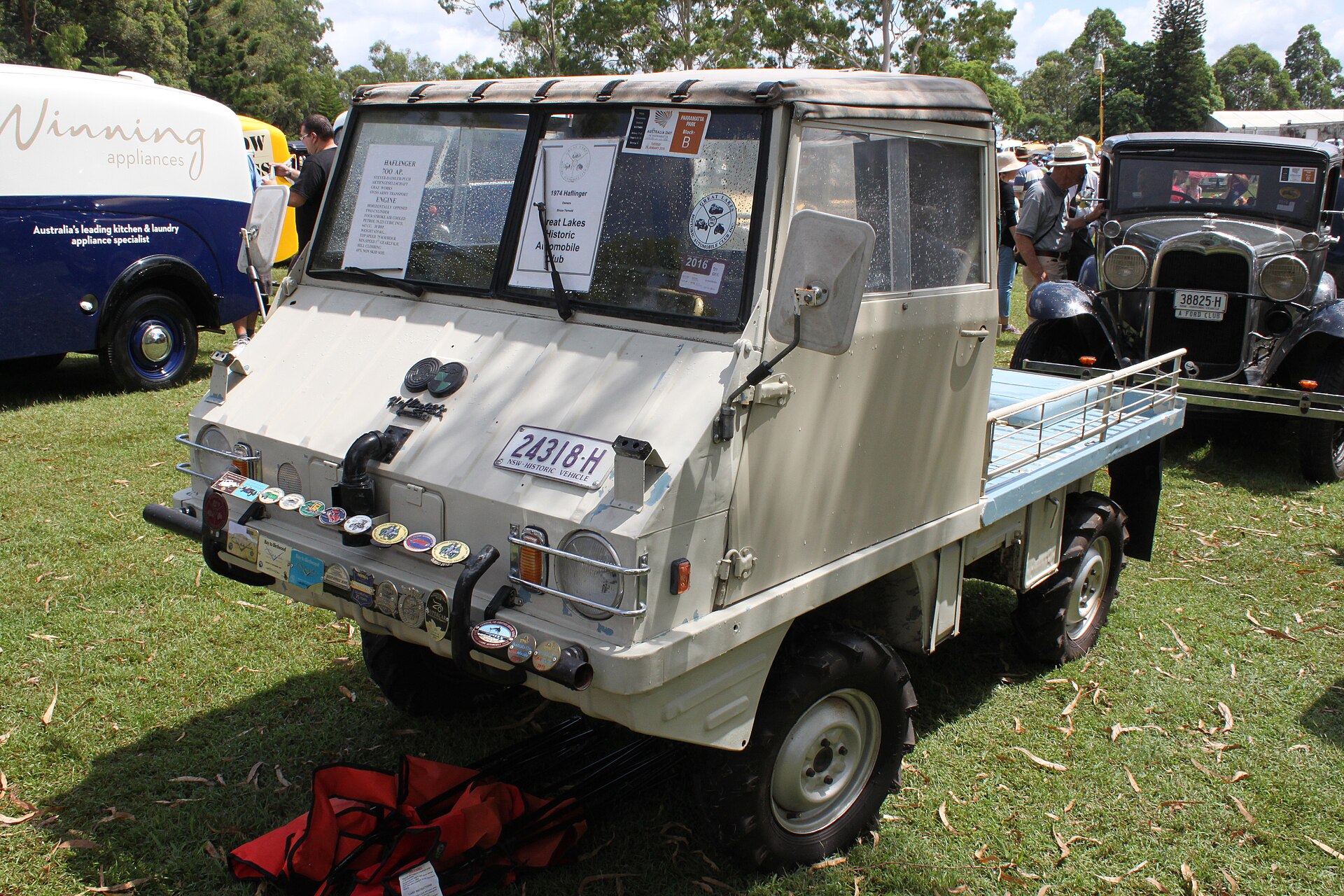
Production peaked at 2,609 in 1962; Australia assembled about 800 from 1966 and its army bought 46, and the SchneeWiesel tracked version and the Polycab enclosed body were the variants. The Pinzgauer took its military role from 1971 and the Haflinger ended in 1974.
Series I (1959–1967)
3 VEHICLES IN THIS CHAPTERThe four-speed, 22 hp Haflinger for the Bundesheer and Swiss Army and the first civilian exports; the peak year of 1962.
Registry records · chapter 1
Series II and the end (1967–1974)
3 VEHICLES IN THIS CHAPTERFive speeds and 27 hp, the long wheelbase, Australian assembly and the Army’s 46, the Polycab and SchneeWiesel; production ended in 1974.
Registry records · chapter 2

Base models
The structural configurations the registry and the Creator build from; each page carries the researched specification.In service
Where the registry's Haflinger records worked; each opens the themed history.Sources
- Steyr-Puch Haflinger — Wikipedia
- Steyr-Daimler-Puch — Wikipedia