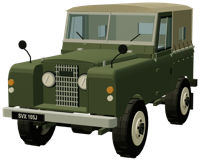
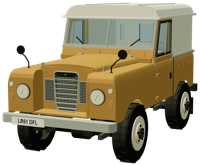
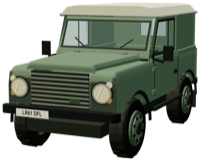
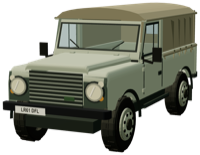
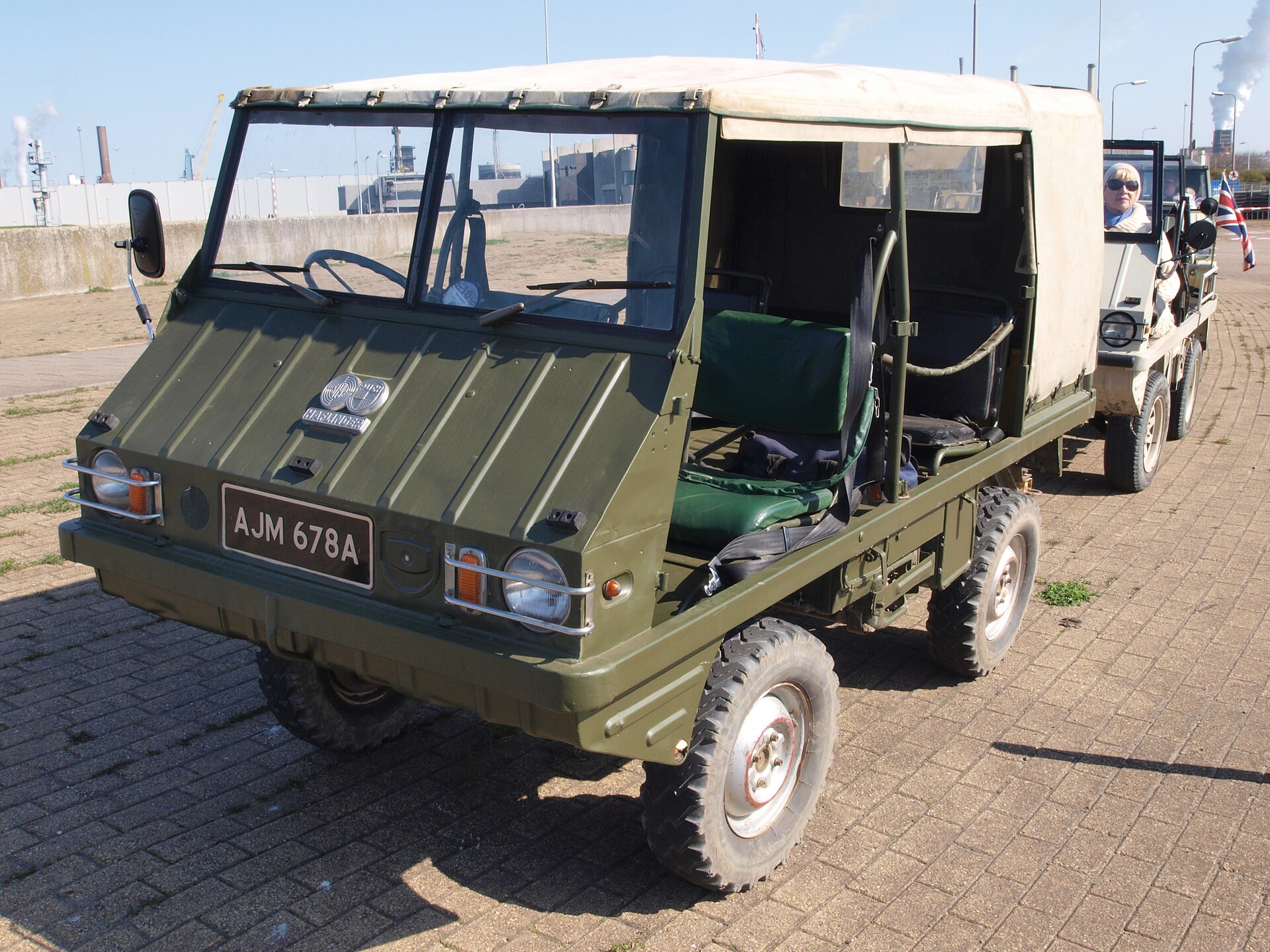
Erich Ledwinka’s little four-wheel drive: the 1959–74 Haflinger with a rear-mounted 643 cc air-cooled flat twin, a central backbone tube, portal axles with swing half-axles, locking differentials front and rear and a 635 kg kerb weight that carried 515 kg; 16,647 built at Graz, about 7,000 for the Austrian, Swiss and Australian armies and the Royal Navy, the rest sold in 35 countries.
MODEL LINEHaflingerBUILT BYMagna Steyr (Steyr-Daimler-Puch), GrazPRODUCED1959–74PRODUCTION16,647LAYOUT4 wheels · 59″
The record
Steyr-Daimler-Puch built the Haflinger for the Austrian Army’s 1958 requirement for a mountain vehicle, using Ledwinka’s backbone-and-portal-axle layout and the Puch 500’s engine; Series I (1959–67) had a four-speed gearbox and 22 hp, Series II (1967–74) a five-speed and 27 hp, and the long 1,800 mm wheelbase came alongside the 1,500 mm. Australia assembled about 800 from 1966 and its army bought 46; the SchneeWiesel tracked version and the Polycab cab were the variants. The Pinzgauer replaced it in 1971–74.
Catalogue fields describe the vehicle's structure and body as this registry records it. They are not certified factory measurements, and no performance figures are published here.
Body styles & colours
Body style
Factory colours
Olive (Bundesheer)
Codes on hover. Hex values are representative approximations of period paint unless a source states a measured value.