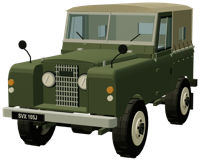
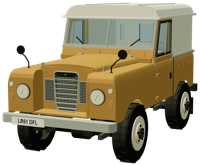
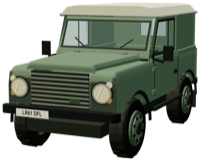
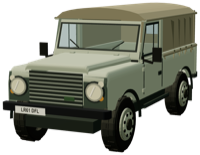
The 100 Series of January 1998 split the wagon in two. The 100 for North America, Europe and Japan had torsion-bar independent front suspension, rack-and-pinion steering and the 4.7-litre 2UZ-FE V8 or 4.2-litre 1HD-FTE turbo-diesel. The 105, for Australia, Africa and the Middle East, kept the 80’s solid front axle and coil springs with the 1FZ-FE petrol six and 1HZ diesel.
The 100 was the Land Cruiser of the Dakar Rally’s production class and of the mining and aid fleets that had run the 80; the 105 stayed the choice where a solid axle mattered. Toyota built it at Toyota City and, from 2003, at Changchun in China. The 200 Series replaced it in 2007.
100 and 105 (1998–2002)
1 VEHICLE IN THIS CHAPTERLaunch with the 2UZ-FE V8 (230 hp) and the 1HD-FTE diesel on the 100; the 105 with the 1FZ-FE and 1HZ. Full-time four-wheel drive with a lockable centre differential on both; a five-speed automatic from 2002.
Registry records · chapter 1

Facelifts and the last 105s (2002–2007)
2 VEHICLES IN THIS CHAPTERFacelifts in 2002 and 2005 brought a new grille, lamps and interior; the 105 gained the 4.5-litre V8 diesel in its last year in some markets. Production ended in 2007 for the 200 Series.
Registry records · chapter 2
Base models
The structural configurations the registry and the Creator build from; each page carries the researched specification.Sources
- Toyota Land Cruiser — Wikipedia
- 75 Years of Toyota — vehicle lineage — Toyota Motor Corporation
- Toyota Land Cruiser (J100) — Wikipedia