The sloping snout and the air-cooled engine are what identify a Protze. No radiator meant nothing to freeze in Russia or boil in North Africa, which is why the type turns up in photographs from both. The third axle is undriven, so this is a 6×4 and not a 6×6 — the Protze’s cross-country reach came from its wheelbase and its light weight rather than from a driven bogie.
The L2H143 of 1936 brought the M 304 and set the two rear axles further apart for stability and traction. Bodies covered nearly everything a division needed: the Kfz 69 towing the 3.7 cm Pak 36, the twelve-seat Kfz 70, the Kfz 19 telephone truck, the Kfz 21 staff car, the Kfz 68 radio mast carrier, the Kfz 81 ammunition carrier for the 2 cm FlaK and the Kfz 83 searchlight generator carrier. Ten armoured Sd.Kfz. 247 Ausf. A command cars were built on the chassis in 1937.
L2H43 (1934–1936)
1 VEHICLE IN THIS CHAPTERThe 3.3-litre air-cooled boxer of 53 hp.
Registry records · chapter 1
L2H143 (1936–1941)
5 VEHICLES IN THIS CHAPTERThe M 304 of 60 hp, wider-set rear axles, and every Kfz body.
Armour and export (1937–1945)
2 VEHICLES IN THIS CHAPTERTen Sd.Kfz. 247 command cars, and service with Hungary, Latvia and Poland.
Registry records · chapter 3
Base models
The structural configurations the registry and the Creator build from; each page carries the researched specification.In service
Where the registry's Protze records worked; each opens the themed history.Sources
- Krupp Protze — Wikipedia
- Krupp Protze — Truck Encyclopedia
Protze records in the registry
8 records, oldest first.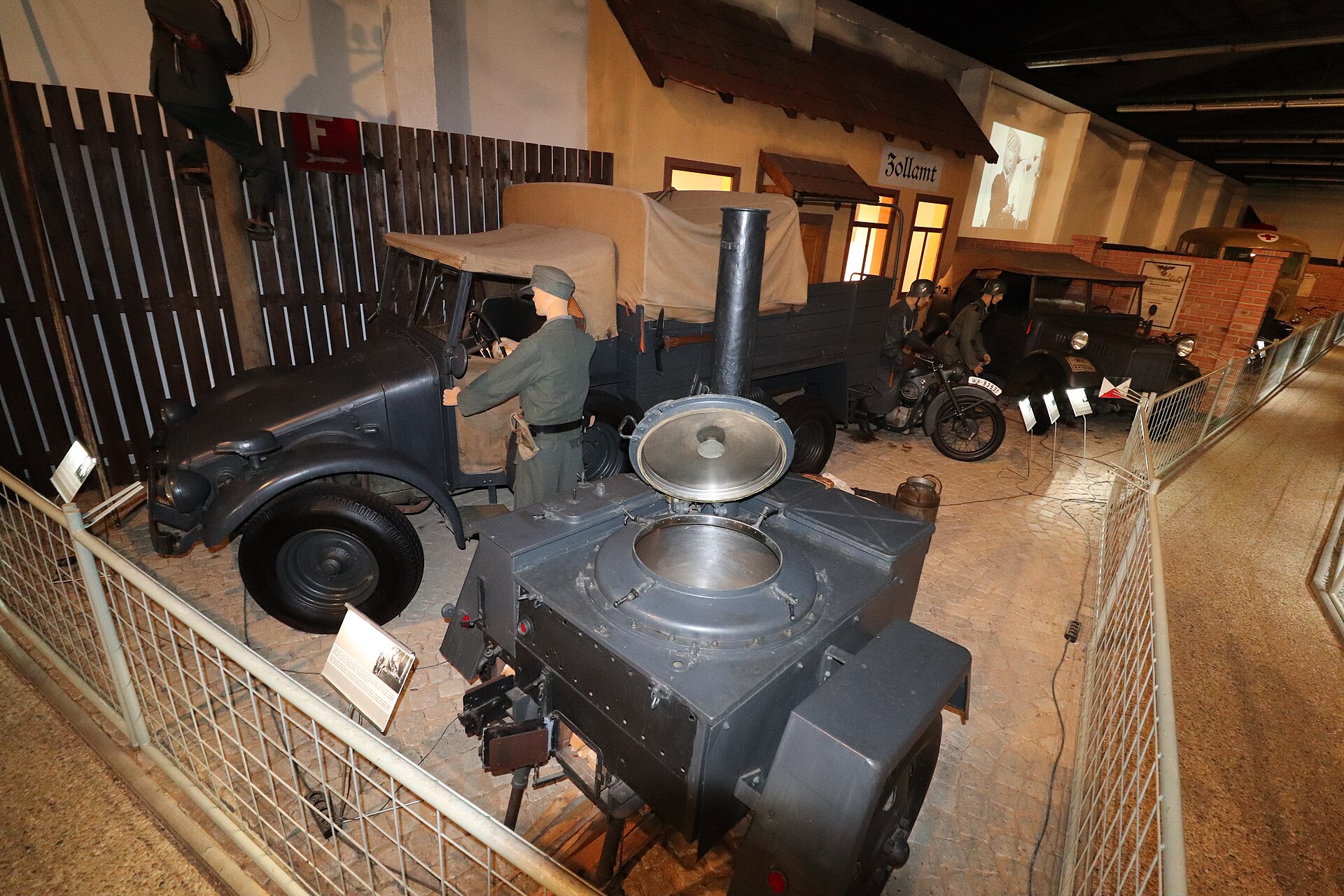 L2H43 Protze (1934–36)1934–36 · Germany
 Kfz 19, 21, 68 and 83 (signals and staff)1936 · Germany
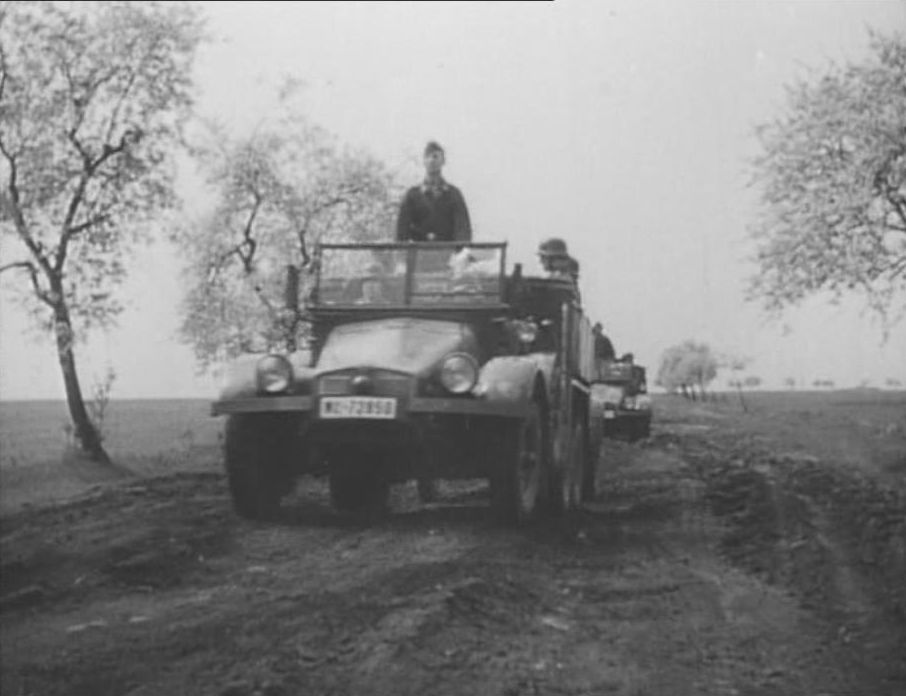 Kfz 69 (3.7 cm Pak tractor)1936 · GermanyKfz 70 (personnel carrier)1936 · Germany
 Kfz 81 (FlaK ammunition carrier)1936 · Germany
 L2H143 Protze (1936–41)1936–41 · GermanySd.Kfz. 247 Ausf. A (1937)1937 · GermanyProtze abroad1939–45 · Germany