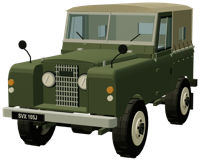
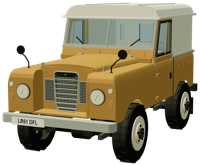
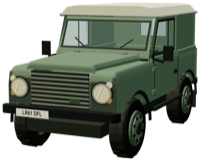
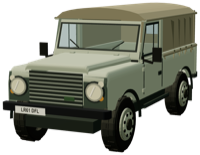
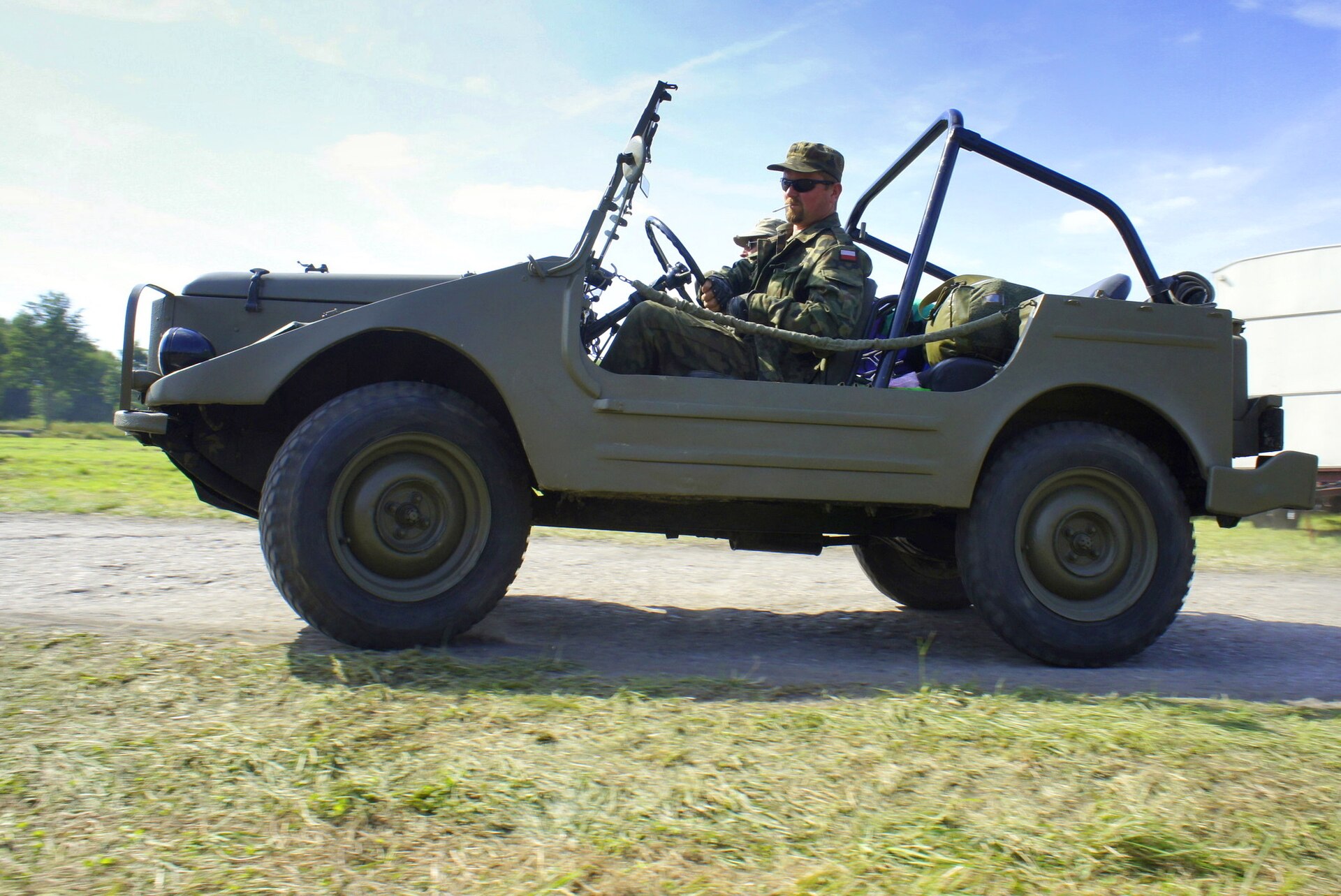
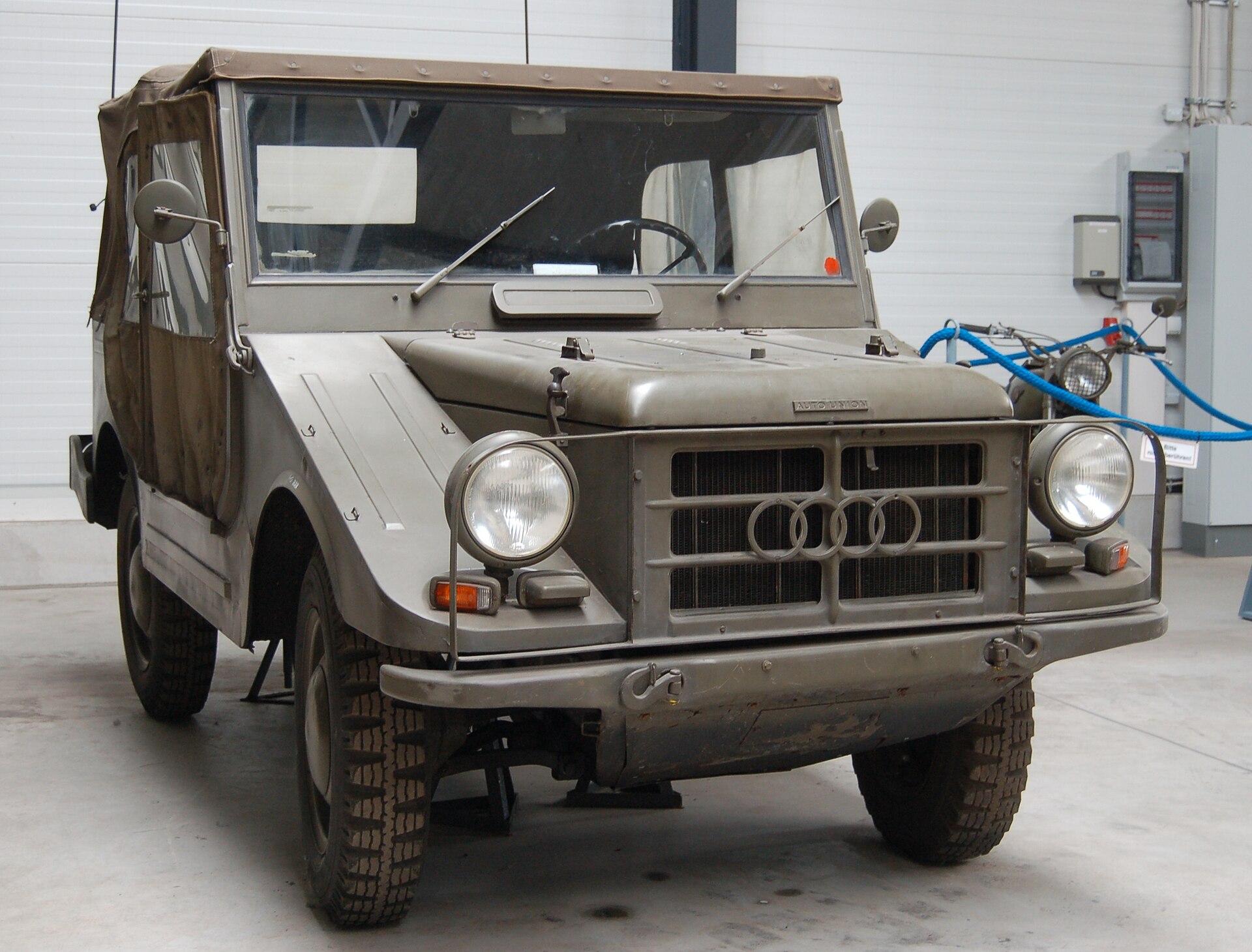
The name is an acronym — Mehrzweck Universal Geländewagen mit Allradantrieb, multi-purpose universal off-road car with all-wheel drive — and the vehicle is as literal as the name. A two-stroke triple has three moving parts where a four-stroke has dozens, and eight gears gave the gearing a heavier vehicle would have needed a separate transfer case for. It beat the Porsche 597 in the Bundeswehr’s competition on exactly those grounds: cheap, simple, repairable.
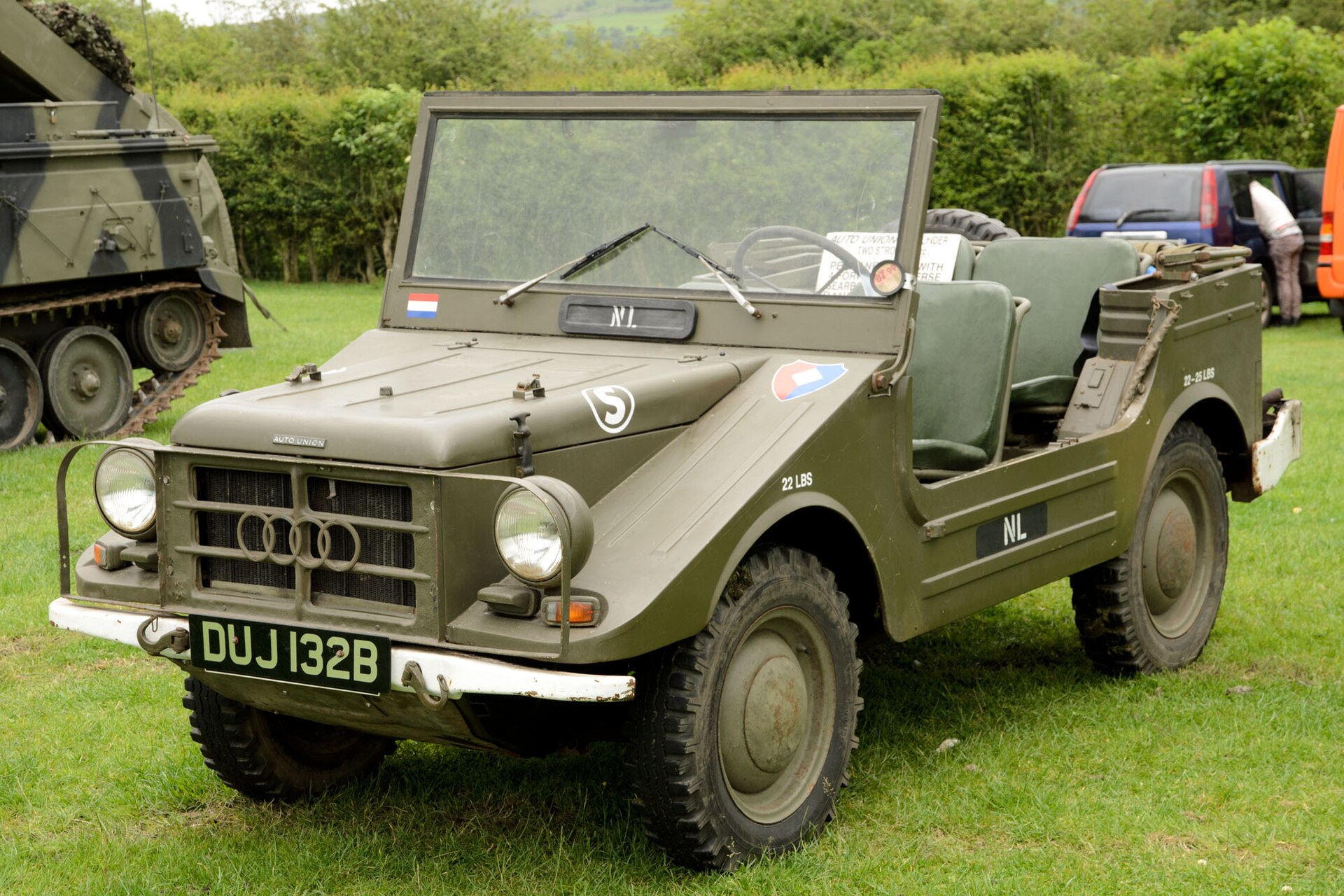
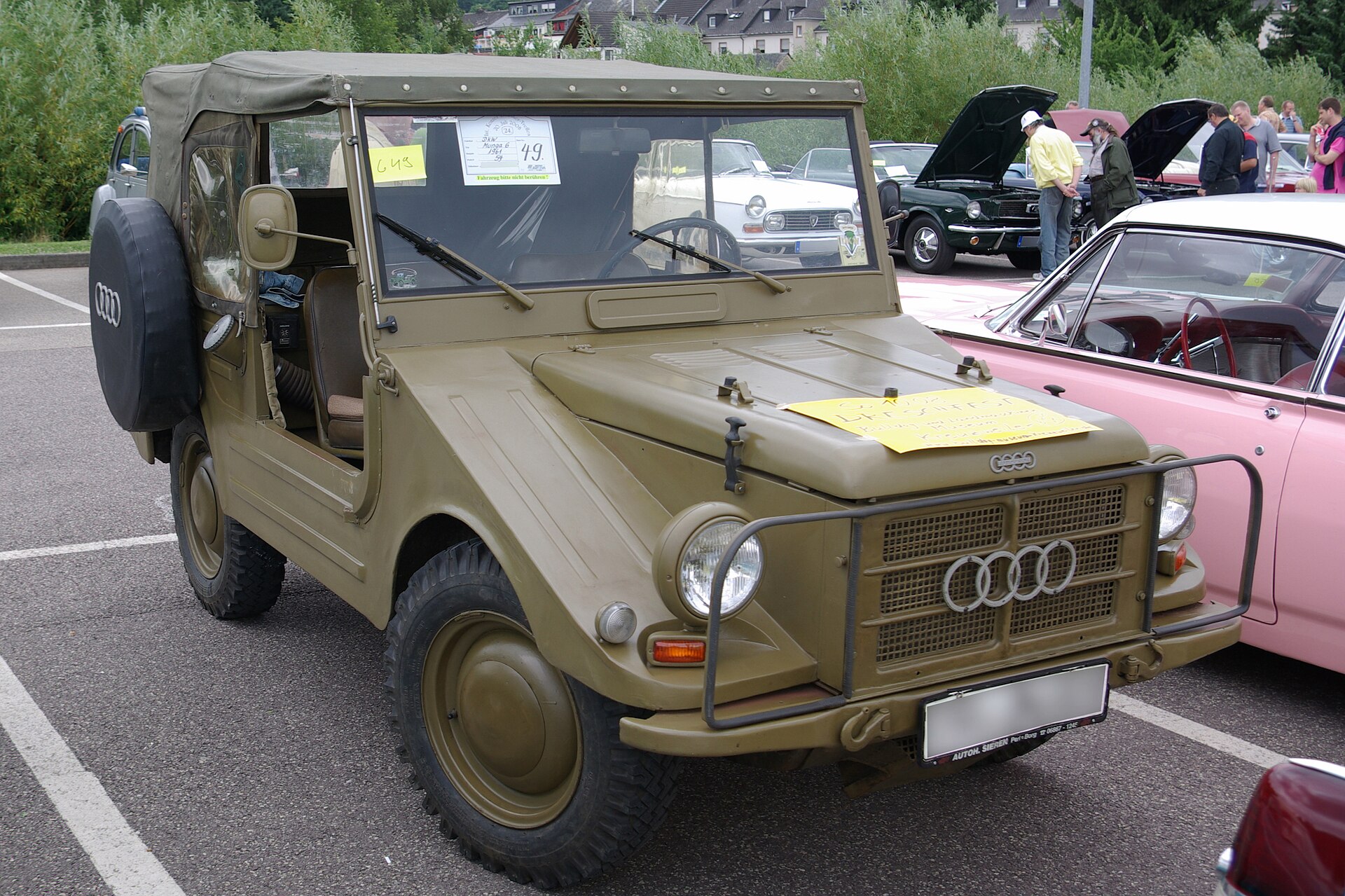
About 2,000 went to the Royal Netherlands Army and many of those to Britain as surplus in the late 1970s, which is why the Munga is better known there than German sales alone would explain. The civilian version cost DM 9,500 and went to farms and foresters. DKW-Vemag built it in São Paulo as the Candango from 1958 to 1963. When the Bundeswehr wanted a replacement, Audi drew the Volkswagen Iltis from it.
Bundeswehr and the tender (1956–1960s)
3 VEHICLES IN THIS CHAPTERChosen over the Porsche 597; the four-seat F91/4 in German service.
Registry records · chapter 1
Pick-ups and civilians (1957–1968)
3 VEHICLES IN THIS CHAPTERThe six- and eight-seat pick-ups, and the DM 9,500 civilian car for farms and foresters.
Registry records · chapter 2

Abroad (1958–1970s)
2 VEHICLES IN THIS CHAPTERThe Brazilian Candango, and the Dutch army cars that later reached Britain.
Registry records · chapter 3
Base models
The structural configurations the registry and the Creator build from; each page carries the researched specification.In service
Where the registry's Munga records worked; each opens the themed history.Sources
- DKW Munga — Wikipedia
- DKW Munga (1956 – 1968) Review — Honest John Classics