4x4s.org BASE MODEL · 1928–34
BASE MODELFrance

Kégresse P15 N snow half-track (1928–34)

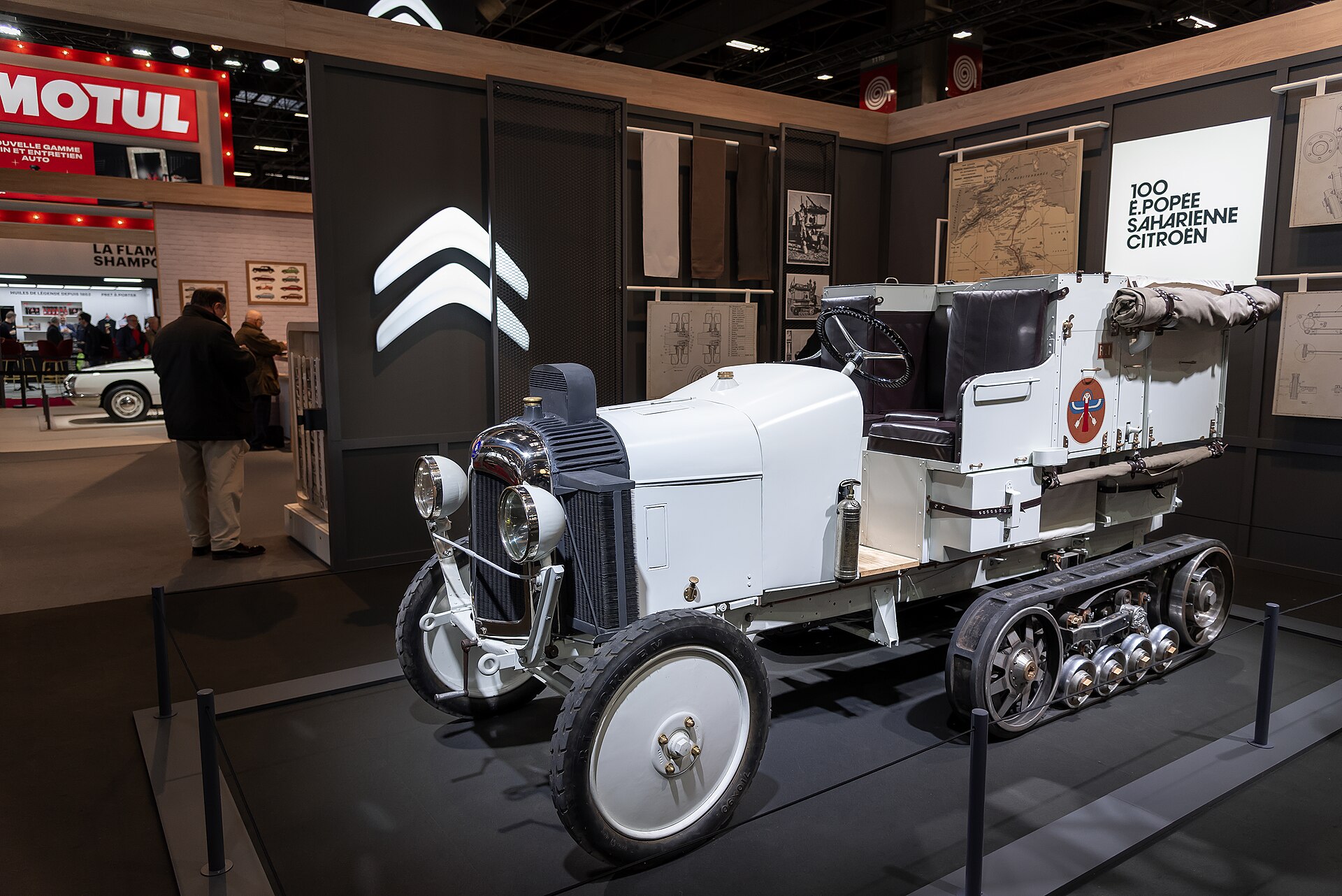
The only Citroën-Kégresse bogie designed for snow, hence the N: a 400 mm track of 70 duralumin plates on rubber-tyred rollers, with skis and a snow compactor at the front, on the C6 with its 2,442 cc six. Accepted on 6 December 1928; the P15 NK of 1932 had a 3,015 cc six and the P15 N 75 of 1934 the 2,650 cc six of the 15 Rosalie.

Difflocked · free browser gamePlay & customise vintage 4×4s →Race classic 4×4s, build your own and keep it in your garage. Free, in the browser.
Kégresse P15 N snow half-track (1928–34) — A Citroën-Kégresse snow half-track with front skis at the Paris commercial vehicle show, Grand Palais, 1928.Agence Rol · Public domain ↗
MODEL LINEKégresse C4 and C6BUILT BYCitroënPRODUCED1928–34OPERATED INFrance, Switzerland, AustriaPRODUCTIONNot publishedLAYOUT2 wheels

The record

The P15 N ran public transport and goods over the Alpine passes: the Paris–Lyon–Méditerranée and Est railways bought some, a regular Grenoble–Briançon service over the Lautaret opened in January 1932, the Swiss and Austrian posts ran buses on it and Iceland’s road administration ordered four chassis in 1929 and 1930. The Chasseurs Alpins used unarmoured ones as personnel carriers and ambulances. Three went to the Antarctic with Richard Byrd in 1934.

Specification

MANUFACTURERCitroën ↗
Paris (half-track department at Suresnes, then Courbevoie)
MANUFACTURED1928–34
ENGINECitroën C6 six, 2,442 cc; 3,015 cc Kégresse six (P15 NK); 2,650 cc Rosalie six (P15 N 75)Citroën C6 six · Kégresse 3,015 cc six · Citroën 15 Rosalie six
PRODUCTION RUNNot published
COUNTRY OF ORIGINFrance
OPERATED INFrance, Switzerland, Austria, Iceland
STATUSout of production
RECORD KINDBase model
MODEL LINEKégresse C4 and C6
FAMILYKégresse C4 and C6
WHEELS2
BODY STYLETorpédo
VARIANTS2

Catalogue fields describe the vehicle's structure and body as this registry records it. They are not certified factory measurements, and no performance figures are published here.

Body styles & colours

Body style

AI rendering impression

An AI rendering impression starts from a 3D model of this vehicle, which an image model then paints into a scene. It is an artist's impression of the type, made to give a feel for the vehicle in its element — not a photograph, and not a record of any particular vehicle.

Proportions, fittings, markings, colours and the setting can all drift from the original in the process. For the vehicle's actual details, rely on the specification, the photographs and the cited sources on this page.

Sources

  1. 1Les autochenilles Kégresse (Pascal Honegger, 2015) ↗Krybebåndssocietetet (kegresse.dk) · accessed 2026-09-24SOURCE

Registry record updated 2026-09-24 · status: researched