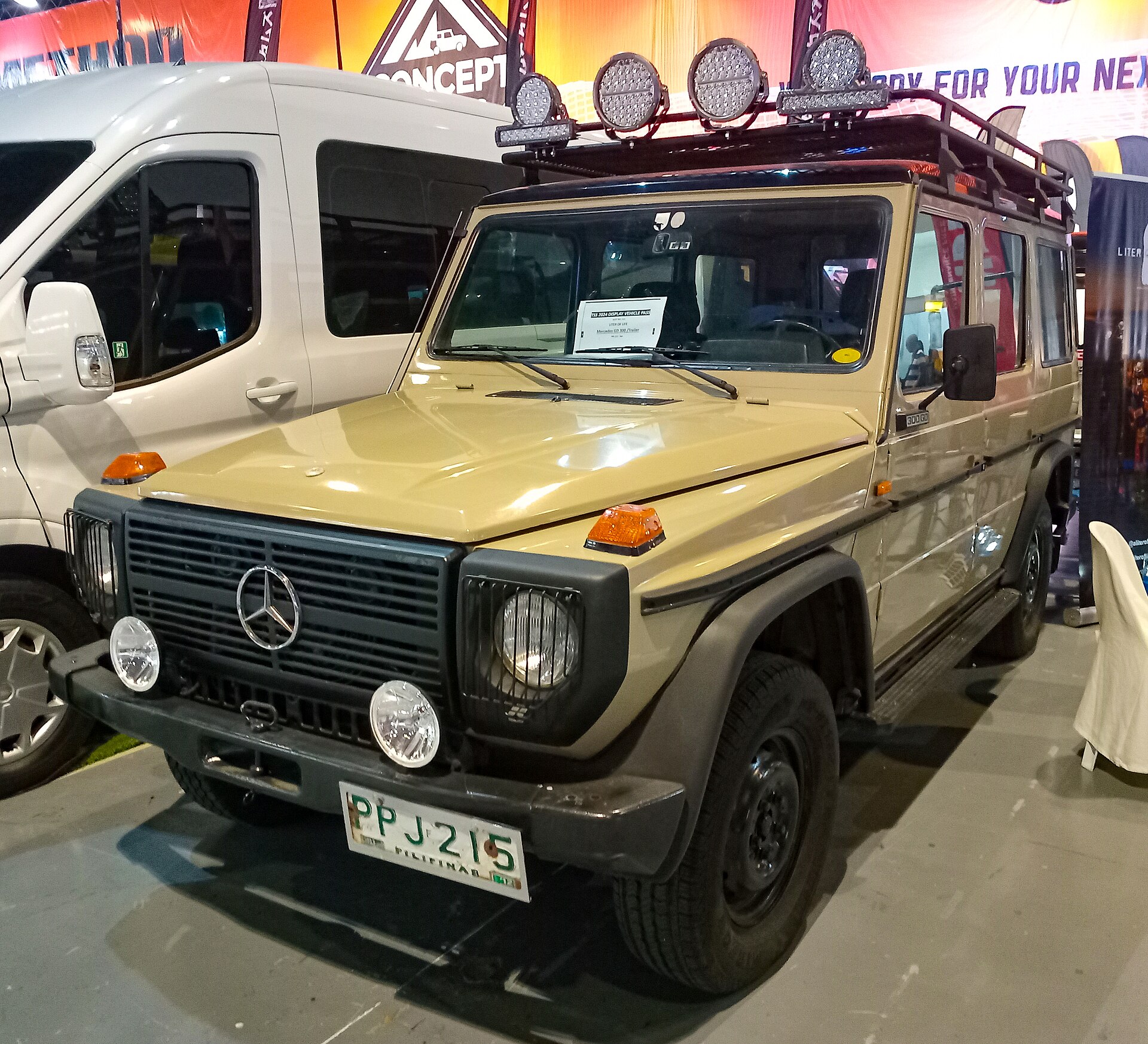
The original Geländewagen: the W460 of 1979–91, developed by Daimler-Benz and Steyr-Daimler-Puch from 1972 and built at Graz, a ladder-frame four-wheel drive with coil-sprung solid axles, part-time four-wheel drive and locking differentials front and rear, on 2,400 and 2,850 mm wheelbases with the 230 G, 280 GE, 240 GD and 300 GD engines, as station wagon, cabriolet and van; sold as the Puch G in Austria and Switzerland.
MODEL LINEG-Class (W460, W461, W463)BUILT BYMercedes-Benz (Daimler-Benz), Magna Steyr (Steyr-Daimler-Puch), GrazPRODUCED1979–91PRODUCTIONNot published separatelyLAYOUT4 wheels · 94.5″
The record
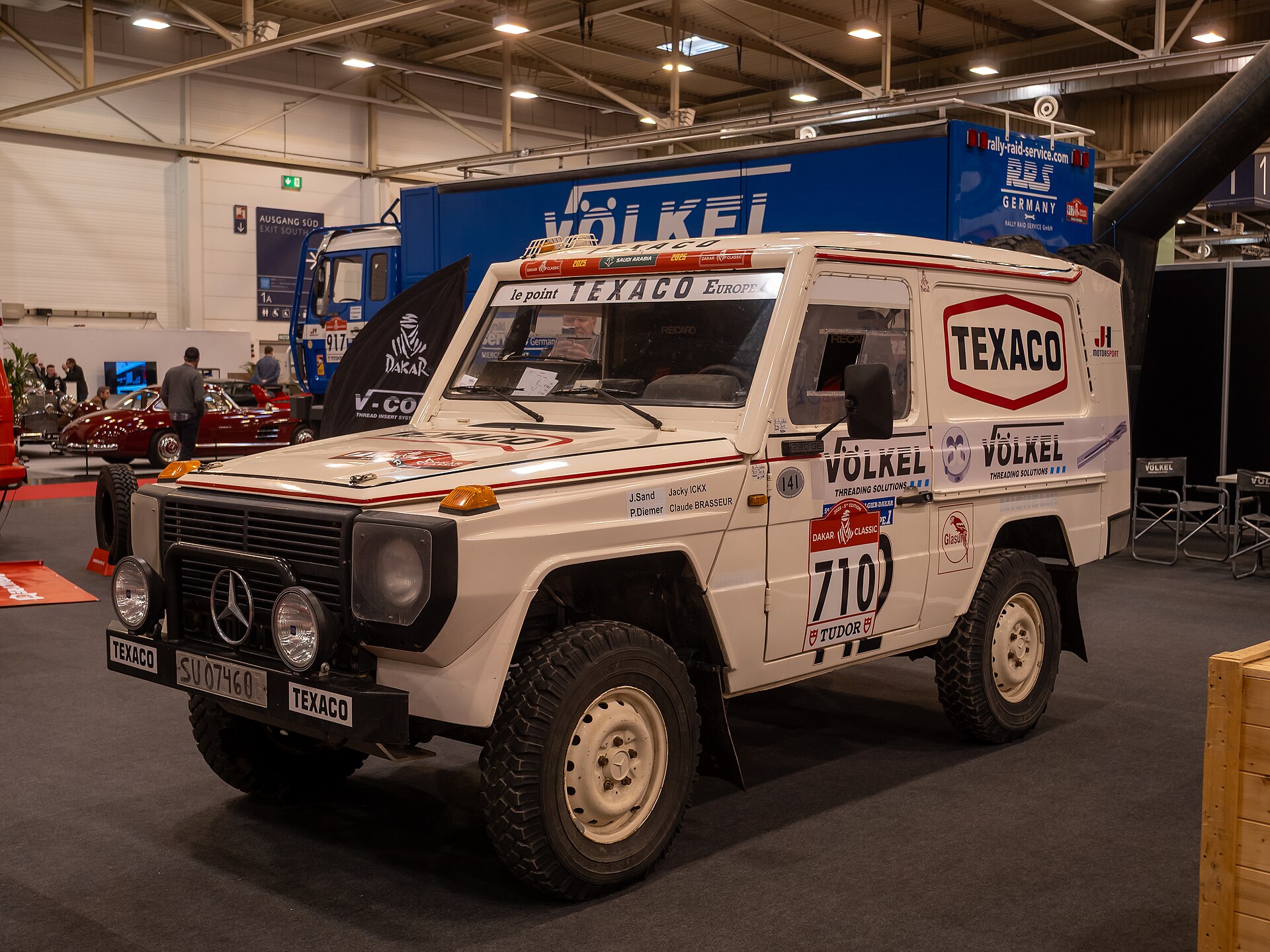
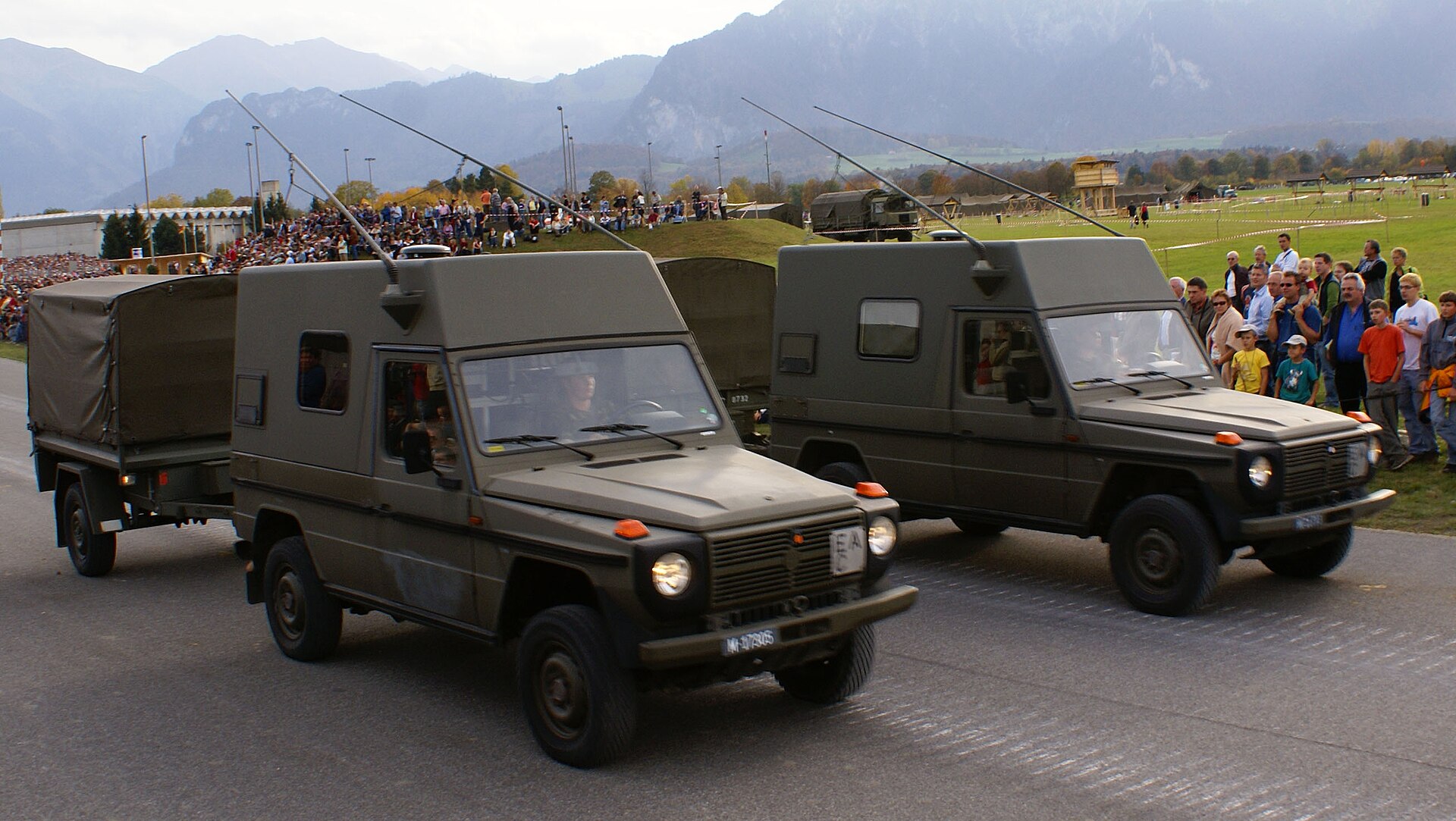
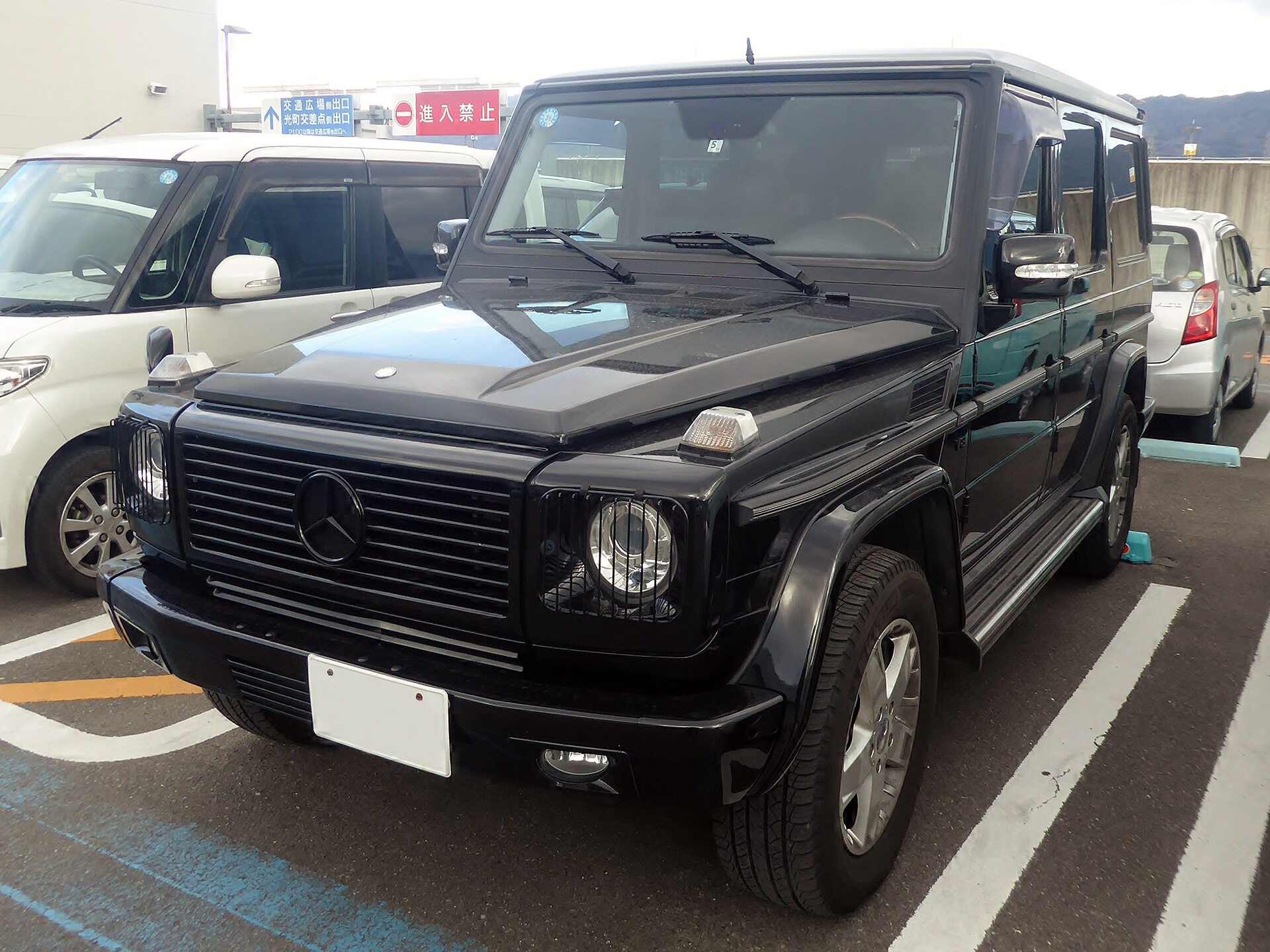
The Shah of Iran’s interest and the Bundeswehr’s requirement started the project in 1972; the first wooden model was shown in 1973, prototypes ran from 1974 and production began at Graz in February 1979. The W460 had a 2,400 mm short and 2,850 mm long chassis, the M115 2.3 four, M110 2.8 six, OM616 2.4 and OM617 3.0 diesels, and the differential locks that made it. The Pope’s G-Wagen of 1980, the Paris–Dakar win of 1983 (Jacky Ickx and Claude Brasseur in a 280 GE) and the Bundeswehr Wolf of 1990 came from it; the W463 of 1990 took the civilian market and the W461 continued the working G.
formerly Steyr-Daimler-Puch, Graz, Austria, for Mercedes-Benz
MANUFACTURED1979–91
ENGINE2.3-litre M115 and 2.5-litre M102 petrol fours; 2.8-litre M110 six; 2.4-litre OM616 and 3.0-litre OM617/OM603 diesels
PRODUCTION RUNNot published separately; the G-Class passed 500,000 in April 2023
COUNTRY OF ORIGINAustria
STATUSreplaced by the W461 (professional) and W463 (civilian)
RECORD KINDBase model
MODEL LINEG-Class (W460, W461, W463)
FAMILYG-Class (W460, W461, W463)
WHEELS4
NOMINAL WHEELBASE94.5″
BODY STYLEShort wheelbase (2,400 mm): station, cabriolet, van
VARIANTS2
Catalogue fields describe the vehicle's structure and body as this registry records it. They are not certified factory measurements, and no performance figures are published here.
Body styles & colours
Body style
Factory colours
Agave Green
Obsidian Black Metallic
Codes on hover. Hex values are representative approximations of period paint unless a source states a measured value.



_1X7A0248.jpg)