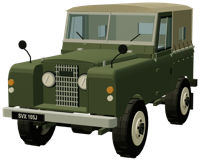
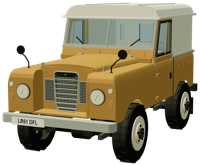
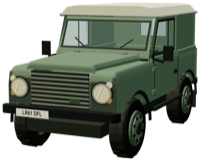
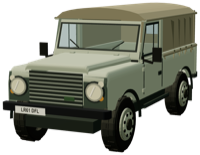
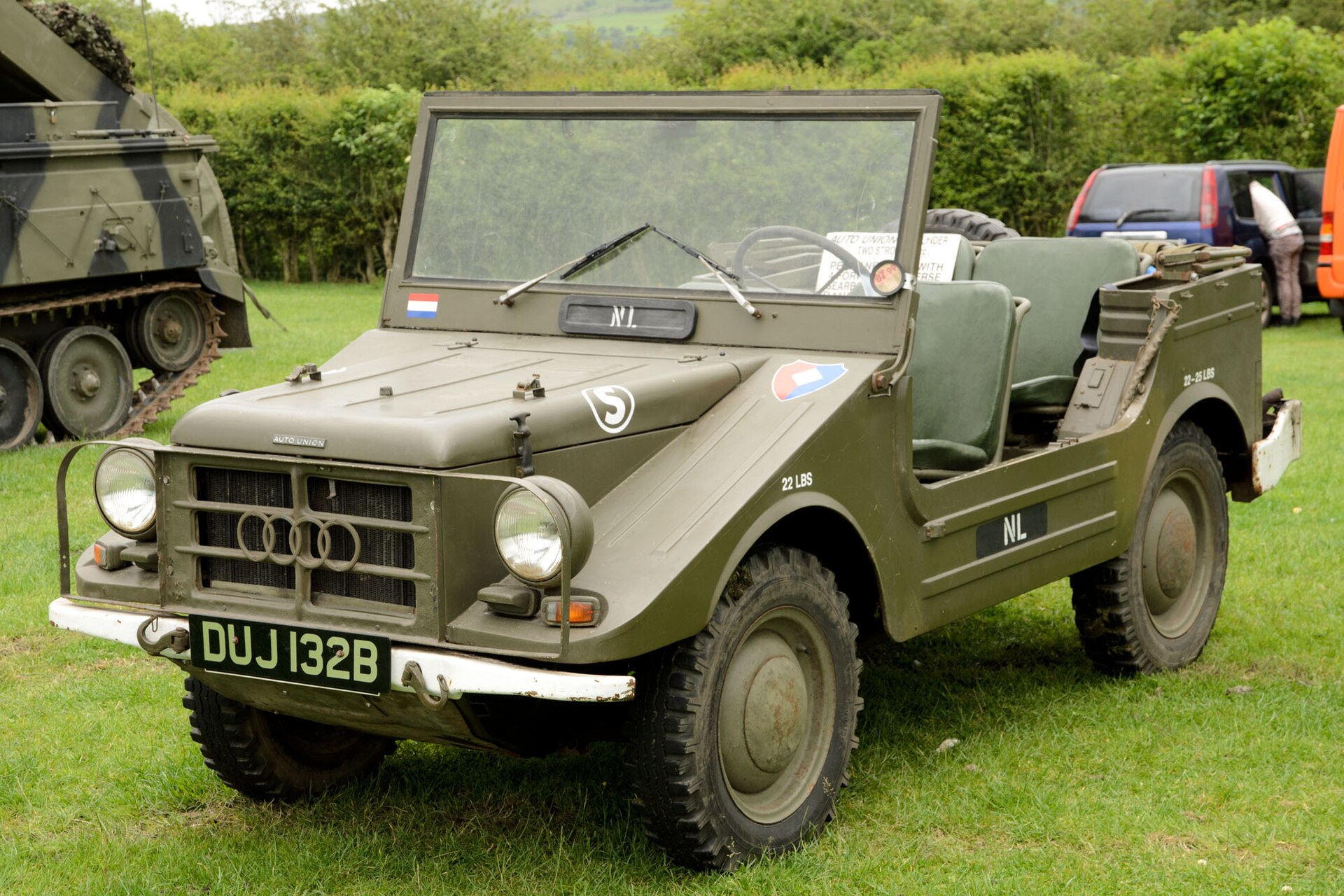
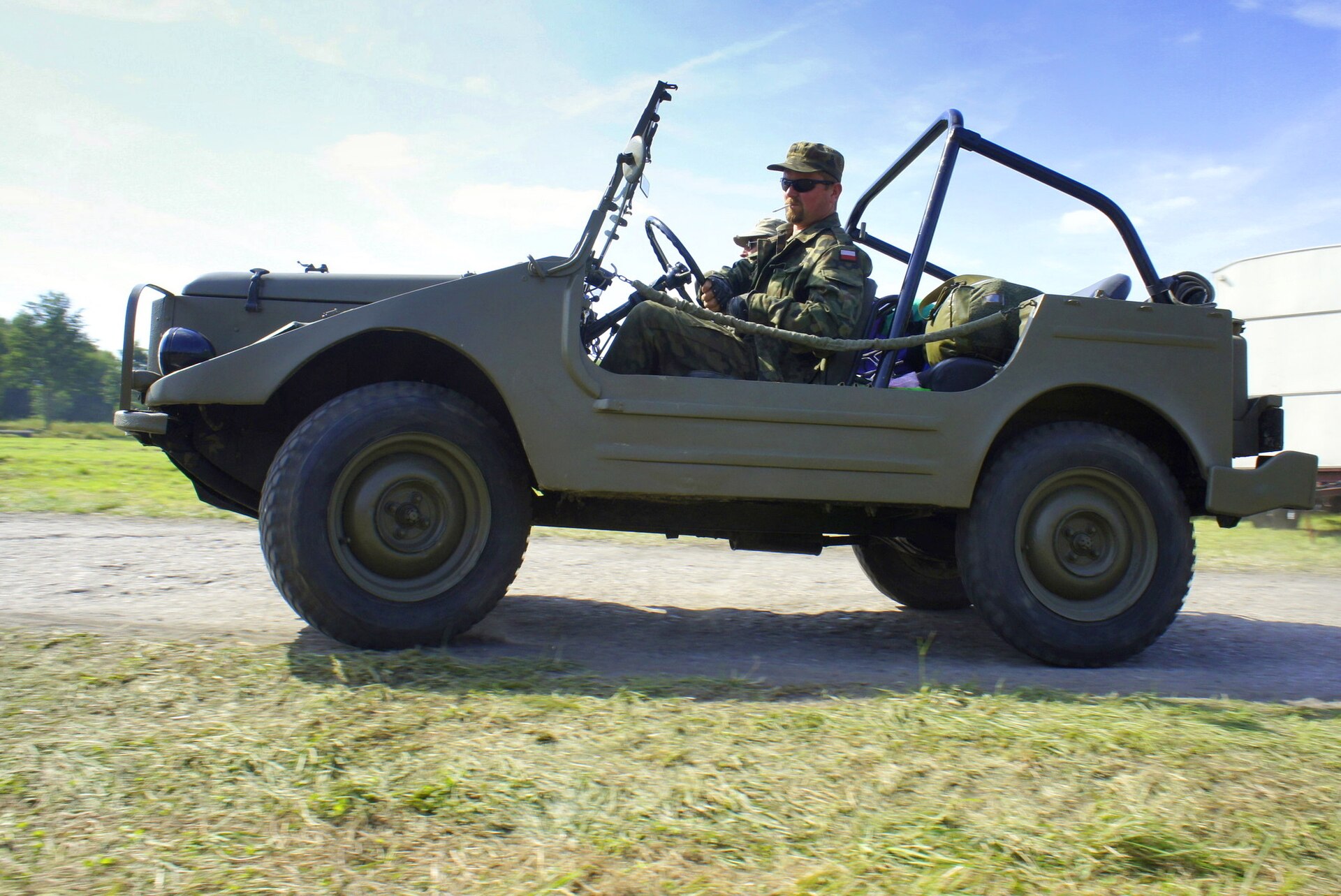
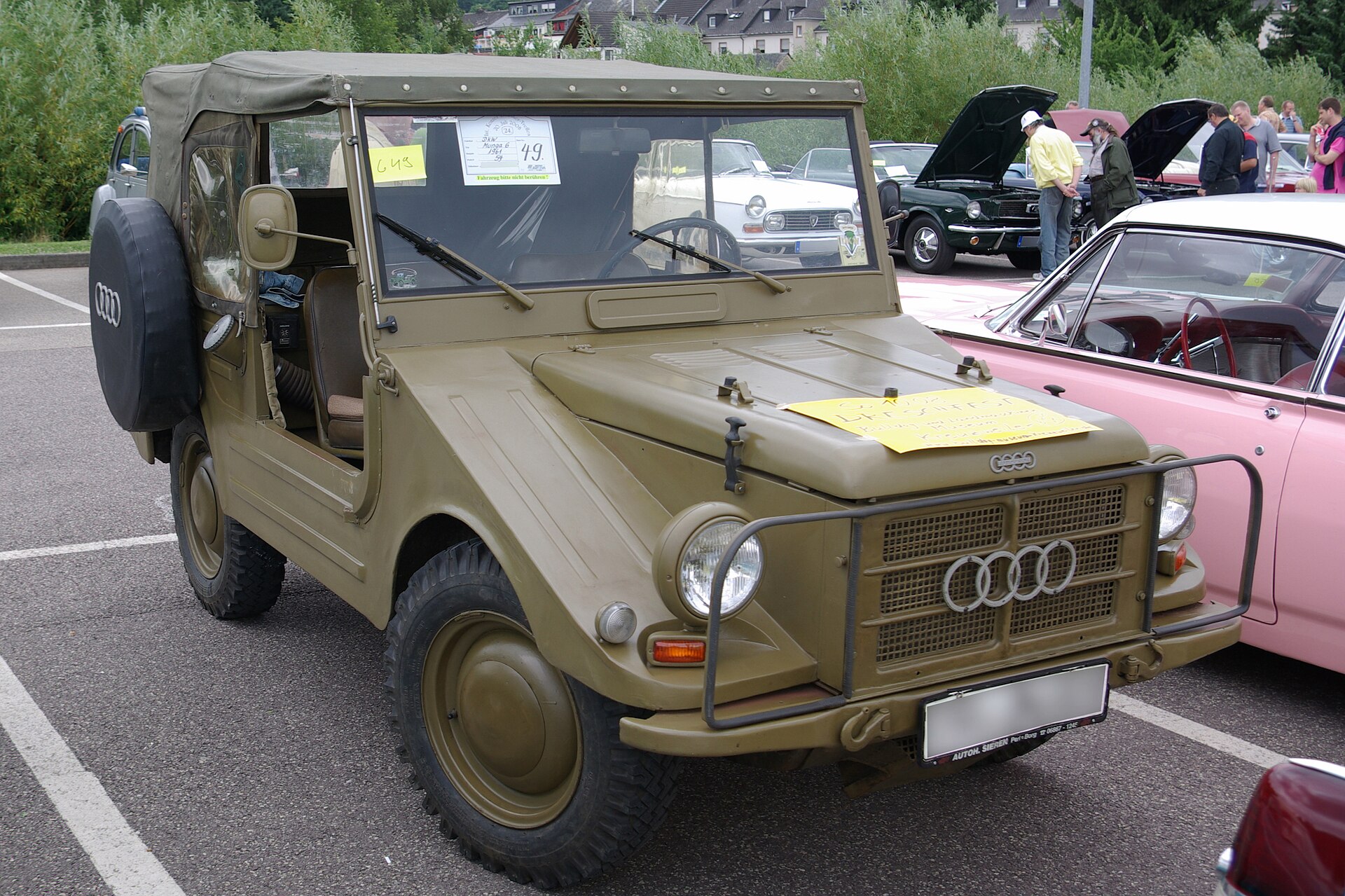
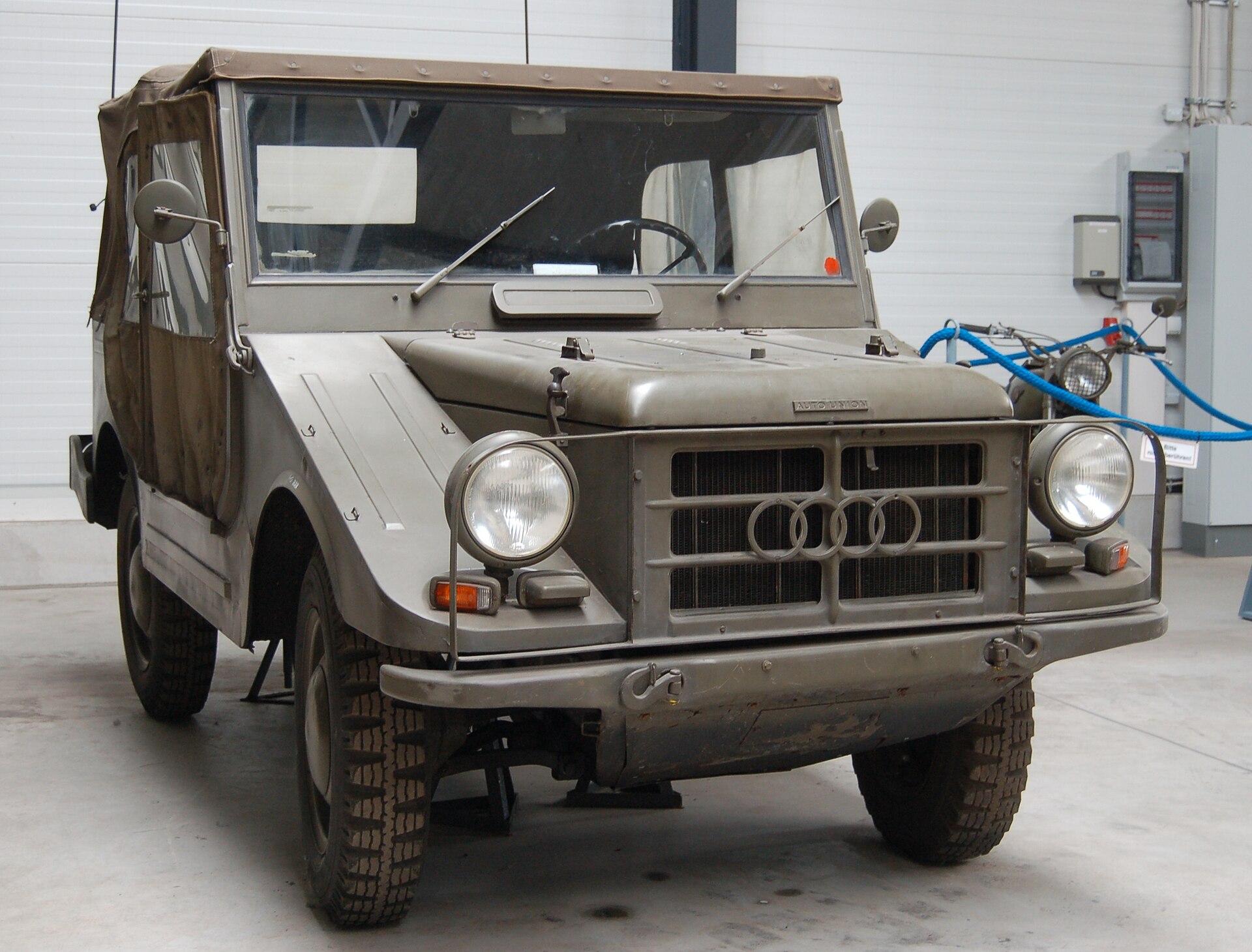
West Germany’s first post-war light four-wheel drive: the Munga, built by Auto Union at Ingolstadt from October 1956 to December 1968, 46,750 in all. Two-stroke three-cylinder engines of 896 cc and later 981 cc through an eight-speed gearbox, on a 2,000 mm wheelbase, 3,445–3,595 mm long and 1,705–1,830 mm wide, in four-seat, pick-up and long pick-up forms.
MODEL LINEMungaBUILT BYAuto Union, IngolstadtPRODUCED1956–68PRODUCTION46,750LAYOUT4 wheels · 79″
The record
The name is an acronym: Mehrzweck Universal Geländewagen mit Allradantrieb — multi-purpose universal off-road car with all-wheel drive. It won the Bundeswehr’s light vehicle competition against the Porsche 597, and served West Germany and, from about 2,000 vehicles, the Royal Netherlands Army, many of which went on to Britain in the late 1970s. The civilian version cost DM 9,500 and sold to farms and foresters in Germany and to countries with poor roads. Audi drew the Volkswagen Iltis from it, and the Iltis drivetrain in turn became the quattro.
STATUSout of production; the Volkswagen Iltis was developed from it
RECORD KINDBase model
MODEL LINEMunga
FAMILYMunga
WHEELS4
NOMINAL WHEELBASE79″
BODY STYLEFour-seat soft top
VARIANTS3
Catalogue fields describe the vehicle's structure and body as this registry records it. They are not certified factory measurements, and no performance figures are published here.
Body styles & colours
Body style
Factory colours
Gelboliv
Light Grey
Codes on hover. Hex values are representative approximations of period paint unless a source states a measured value.

.jpg)