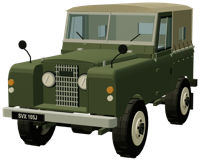
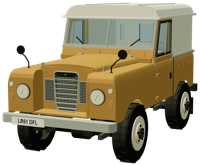
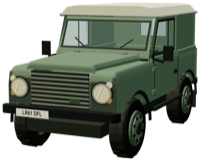
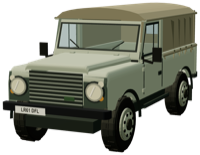
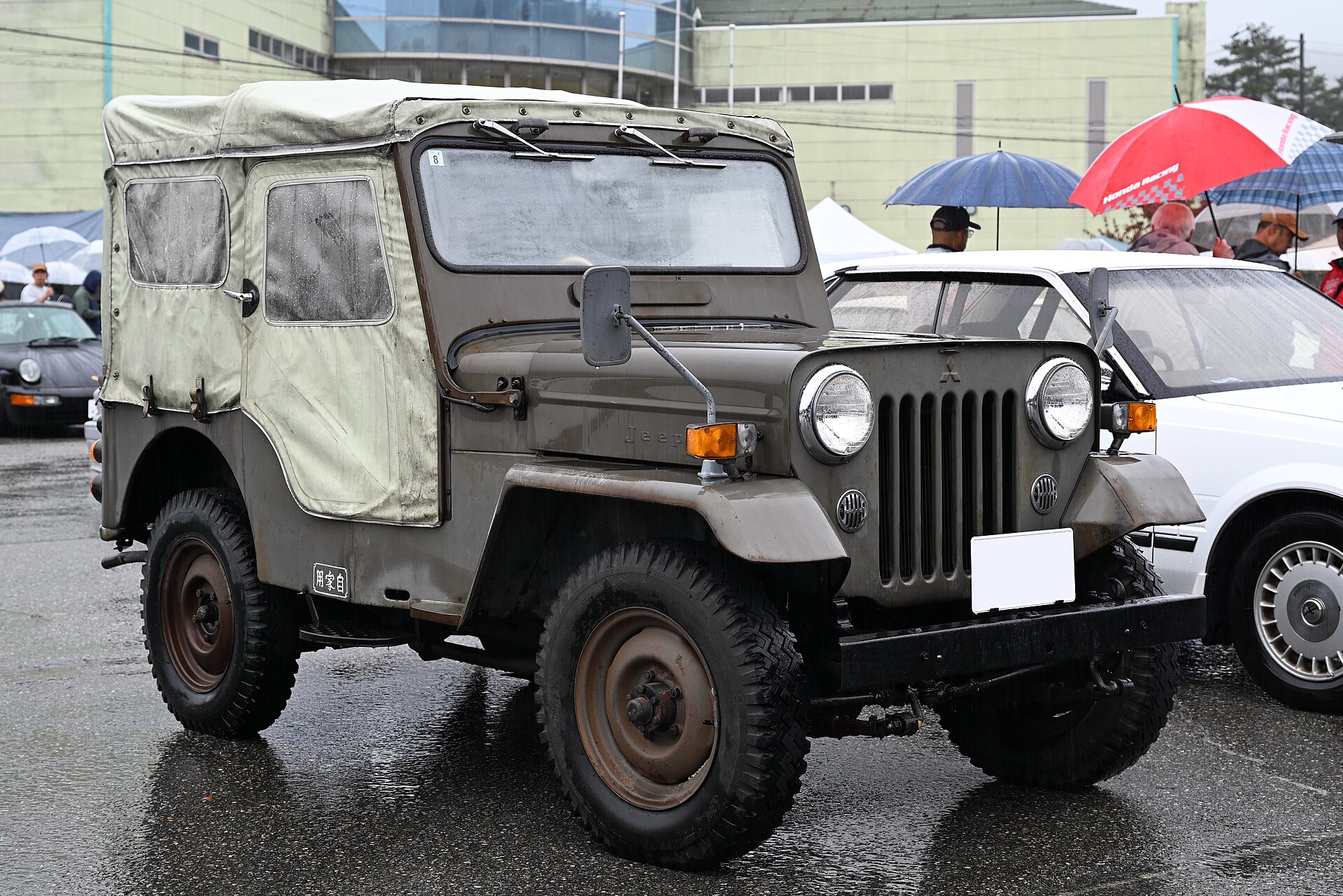
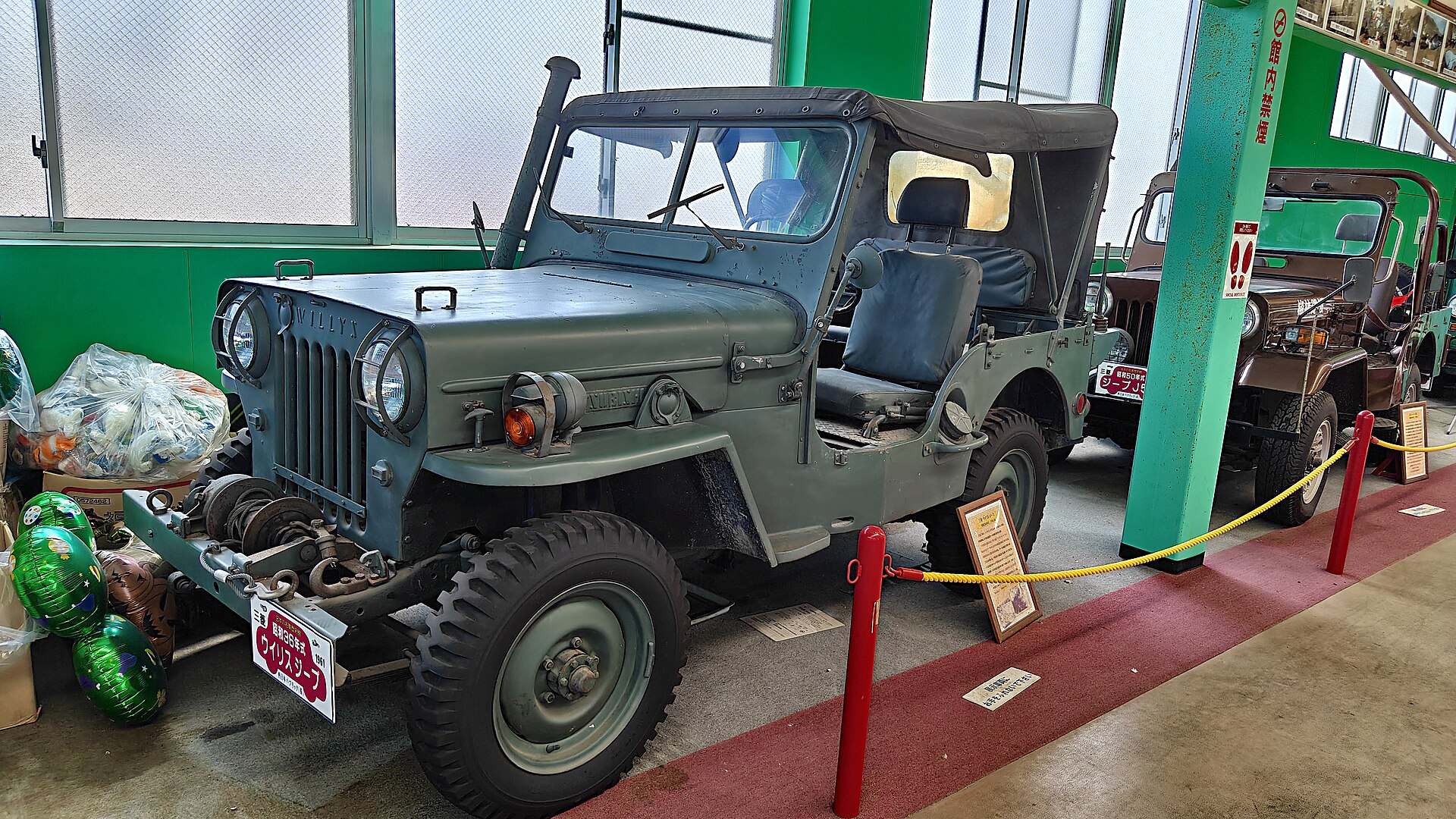
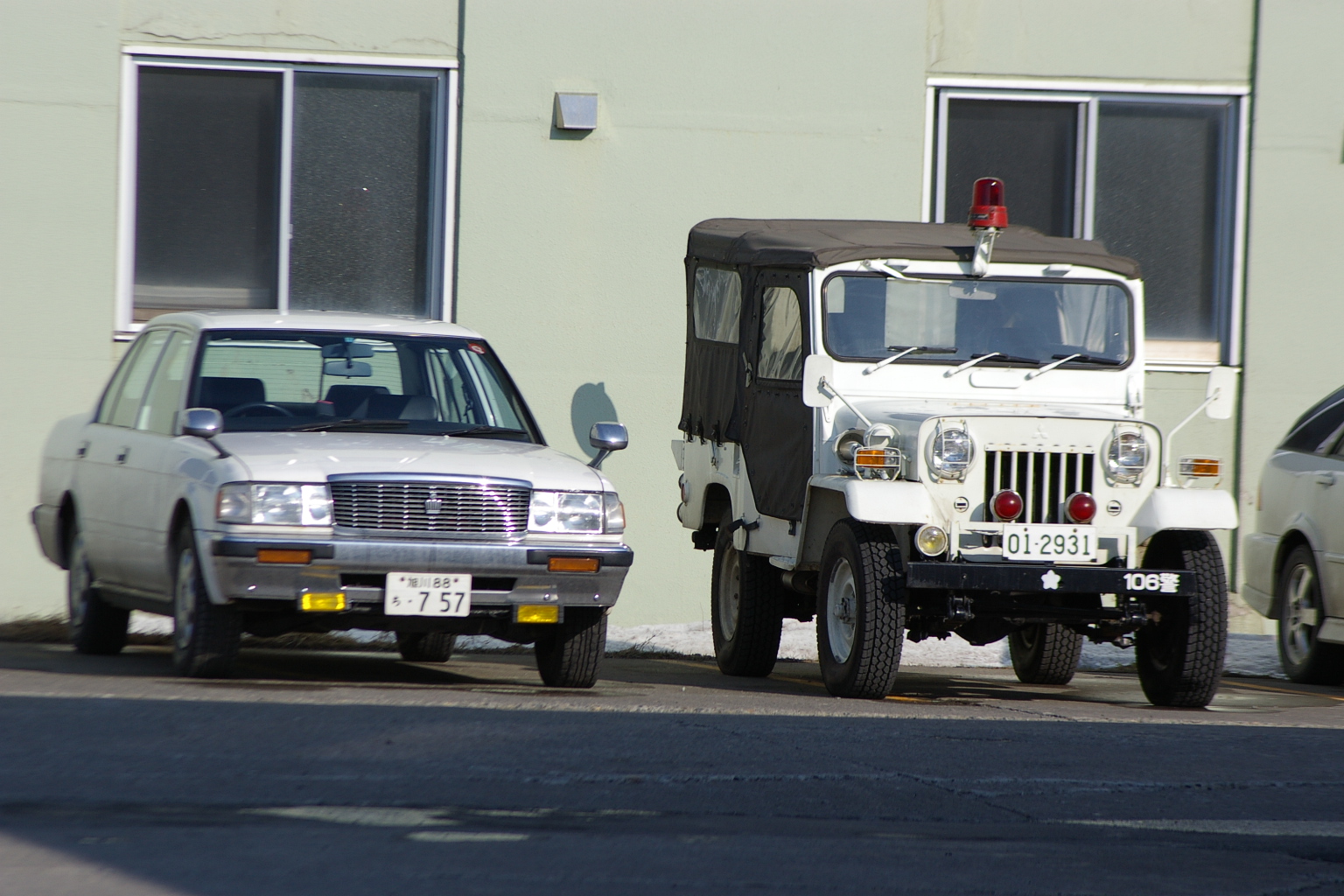
Japan’s Jeep: Mitsubishi built Willys designs under licence for forty-five years — the J1 and J2 of 1952–53 for the police and forestry service, the J3 of July 1953, the long-wheelbase J20 of 1960, the J38 wagon and the J54 and J58 short soft tops — with the 2.2 JH4 petrol, the KE31 diesel of 1958 and the 2.7 4DR5 and 4DR6; about 200,000 were built before emissions and safety rules ended it in August 1998.
MODEL LINEMitsubishi JeepBUILT BYMitsubishi Heavy Industries / Mitsubishi MotorsPRODUCED1953–98PRODUCTIONAbout 200,000LAYOUT4 wheels · 80″
The record
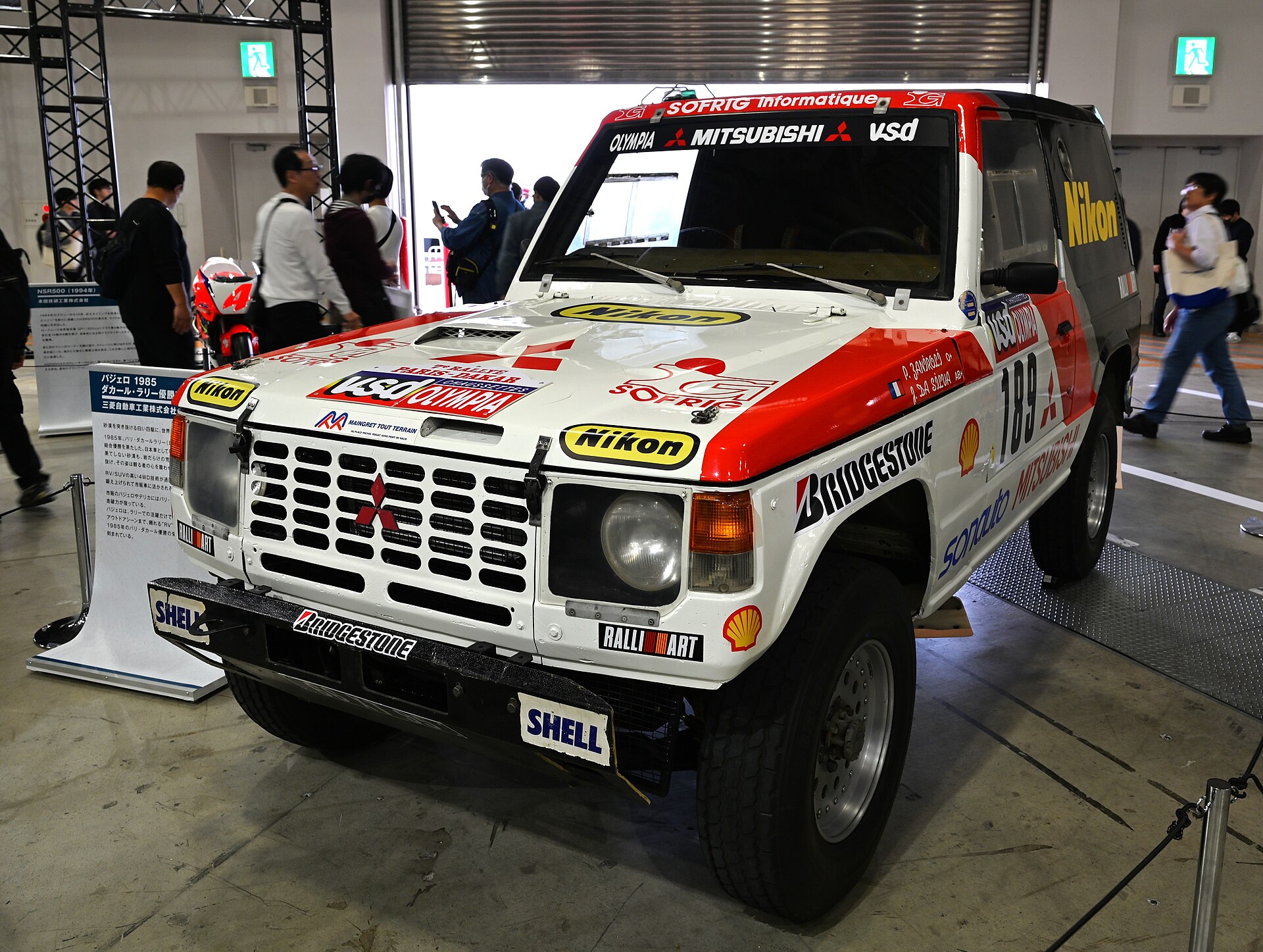
The Jeep licence made Mitsubishi a four-wheel-drive maker and equipped the Japanese Ground Self-Defense Force, which called it the Type 73 light truck; the CJ-3B shape outlasted its American parent by decades. The Pajero took over the civilian market and the new Type 73 the military one from 1996.
ENGINE2.2-litre JH4 petrol four; 2.2-litre KE31 diesel; 2.0 4G52 and 2.4 4G53 petrol; 2.7-litre 4DR5 and 4DR6 diesels
PRODUCTION RUNAbout 200,000
COUNTRY OF ORIGINJapan
STATUSended August 1998 on emissions and safety rules
RECORD KINDBase model
MODEL LINEMitsubishi Jeep
FAMILYMitsubishi Jeep
WHEELS4
NOMINAL WHEELBASE80″
BODY STYLESoft top
VARIANTS3
Catalogue fields describe the vehicle's structure and body as this registry records it. They are not certified factory measurements, and no performance figures are published here.
Body styles & colours
Body style
Factory colours
JGSDF olive green
Codes on hover. Hex values are representative approximations of period paint unless a source states a measured value.