Japan's first purpose-designed four-wheel-drive scout car, and one of the first in the world: about 4,700 built between 1936 and 1944 — 4,775 counting minor changes — on a 2,000 mm wheelbase, 3,600 mm long, 1,520 mm wide, 1,680 mm high and 1,100 kg, with an air-cooled overhead-valve 45° V-twin of 1.2, 1.3 or 1.4 litres giving 33 PS at 3,300 rpm. Three seats, two in front and one behind, 75 km/h and 450 km.
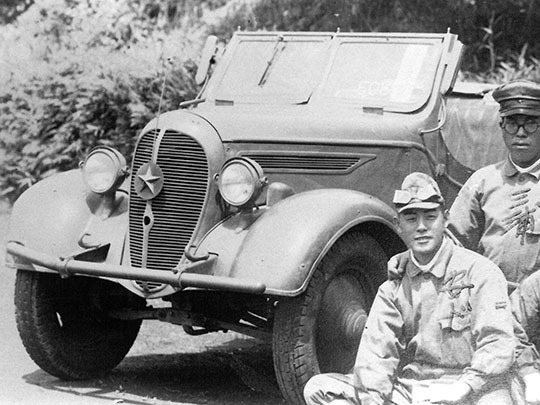
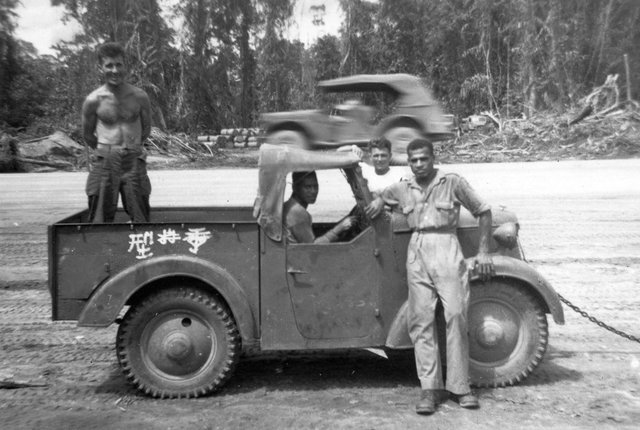
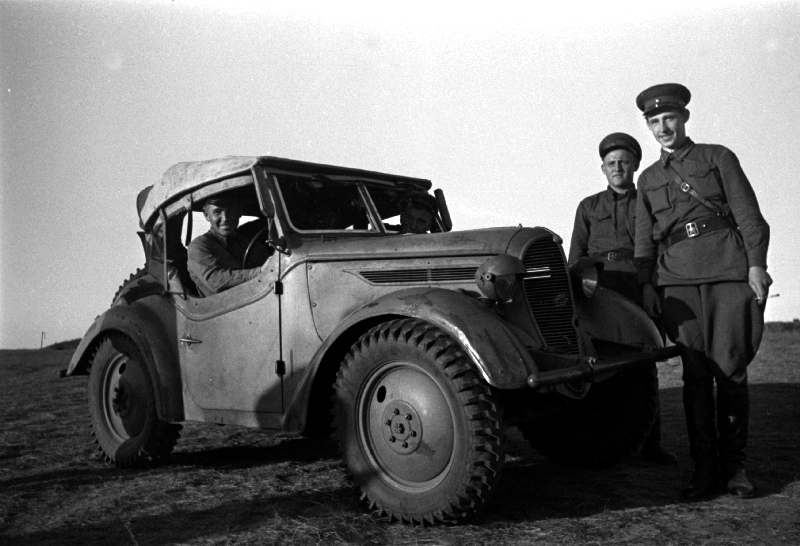
The Type 95 was designed by Tetsuji Makita and built at Ōmori in Tokyo. An air-cooled twin was an unusual choice for a military vehicle and a deliberate one: nothing to freeze in Manchuria, nothing to boil in the tropics, and no radiator to lose to a bullet. It was offered as a two-door roadster, a two-door pick-up and a four-door phaeton, and it predates the American jeep by five years. Survivors are very rare.
PRODUCTION RUNAbout 4,700 (4,775 counting minor changes)
COUNTRY OF ORIGINJapan
OPERATED INJapan
STATUSout of production
RECORD KINDBase model
MODEL LINEType 95
FAMILYType 95
WHEELS4
NOMINAL WHEELBASE79″
BODY STYLETwo-door roadster
VARIANTS3
Catalogue fields describe the vehicle's structure and body as this registry records it. They are not certified factory measurements, and no performance figures are published here.
Body styles & colours
Body style
Factory colours
Army Khaki
Codes on hover. Hex values are representative approximations of period paint unless a source states a measured value.
Imagery
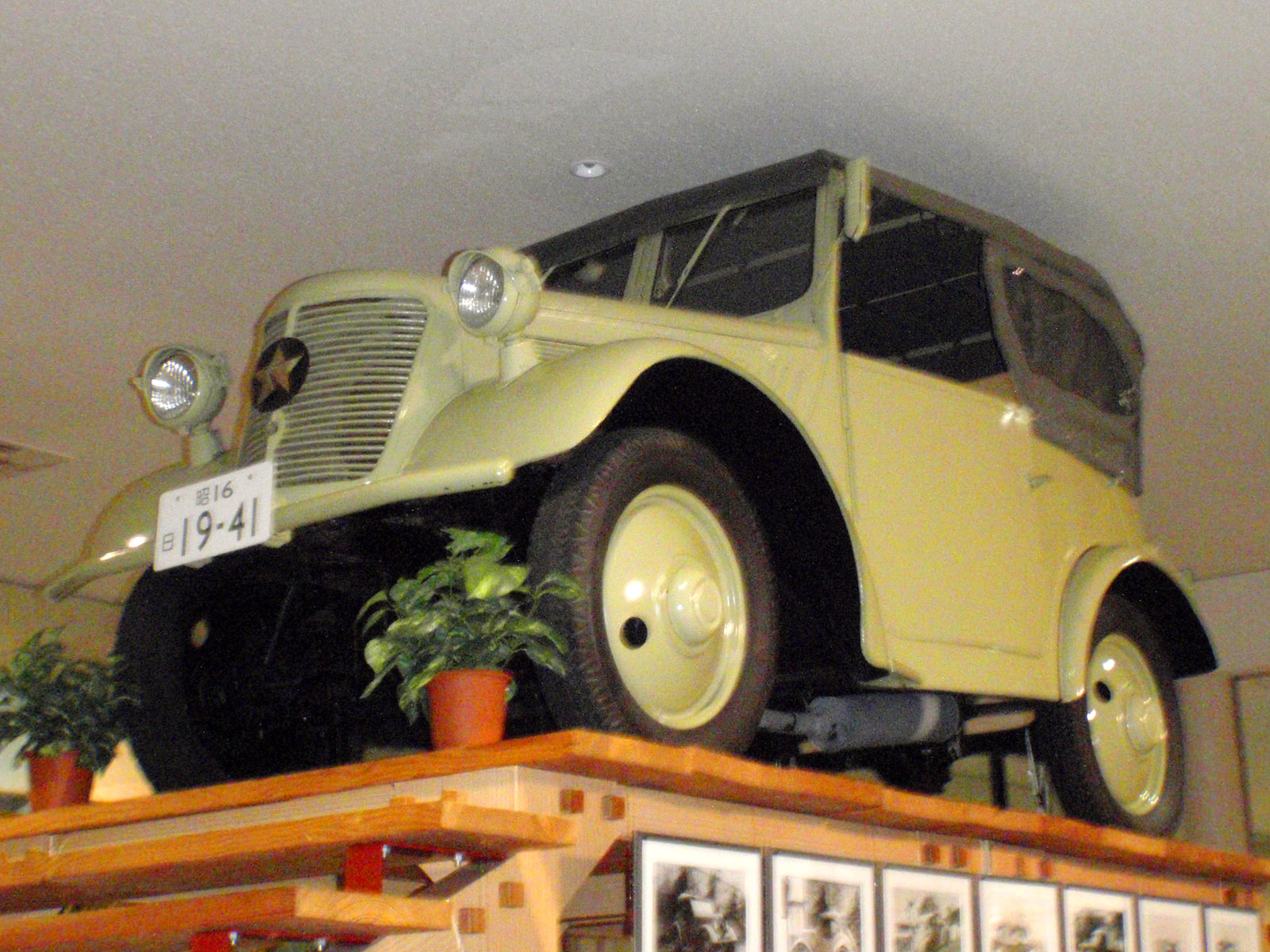
A 1941 Kurogane in the Motorcar Museum of Japan, described there as the first Japanese four-wheel drive.Kzaral · CC BY 2.0 ↗

.jpg)