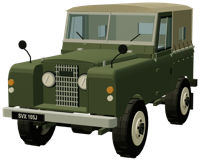
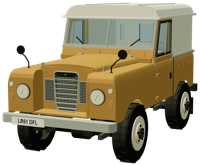
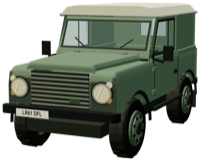
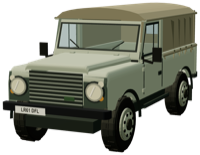
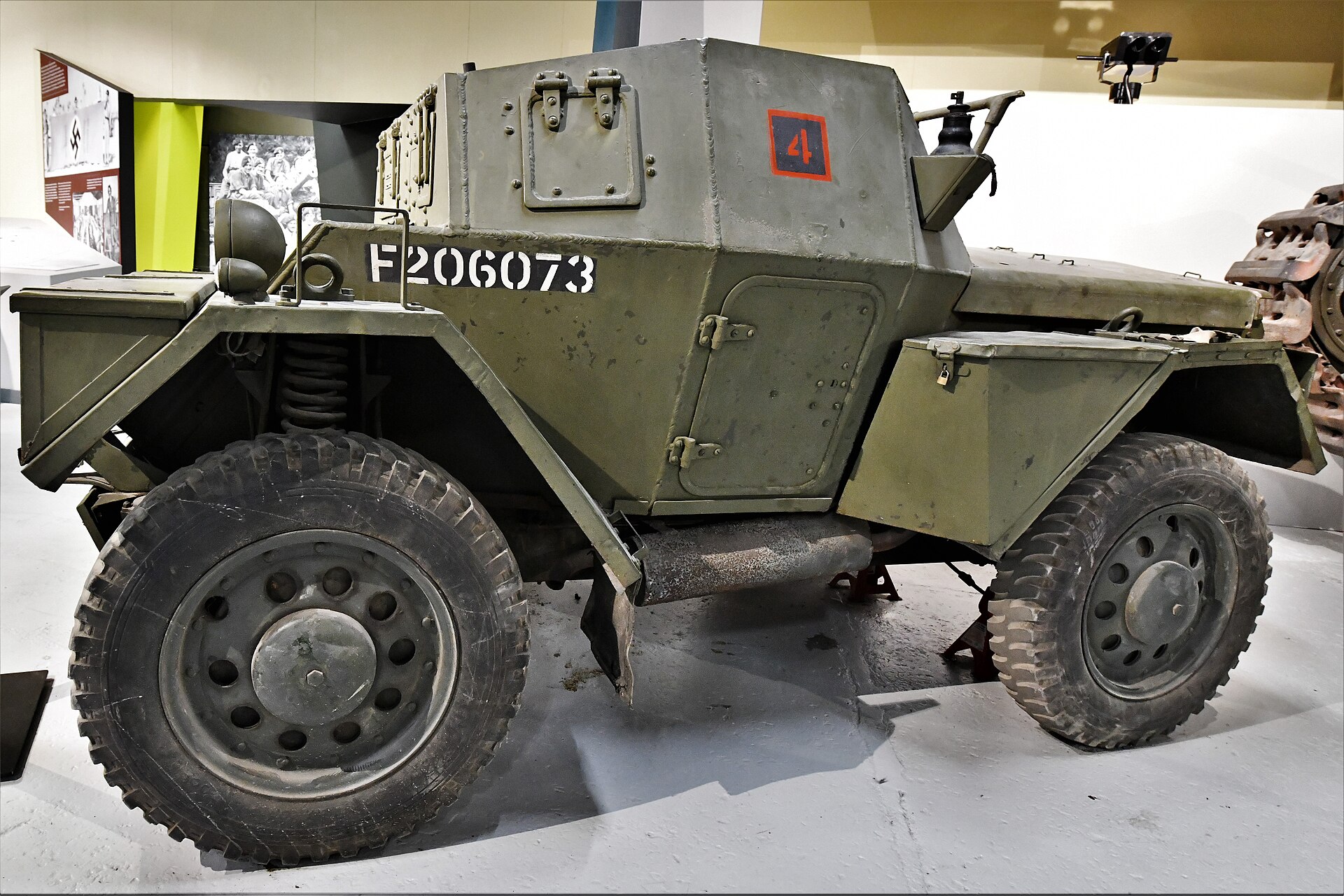
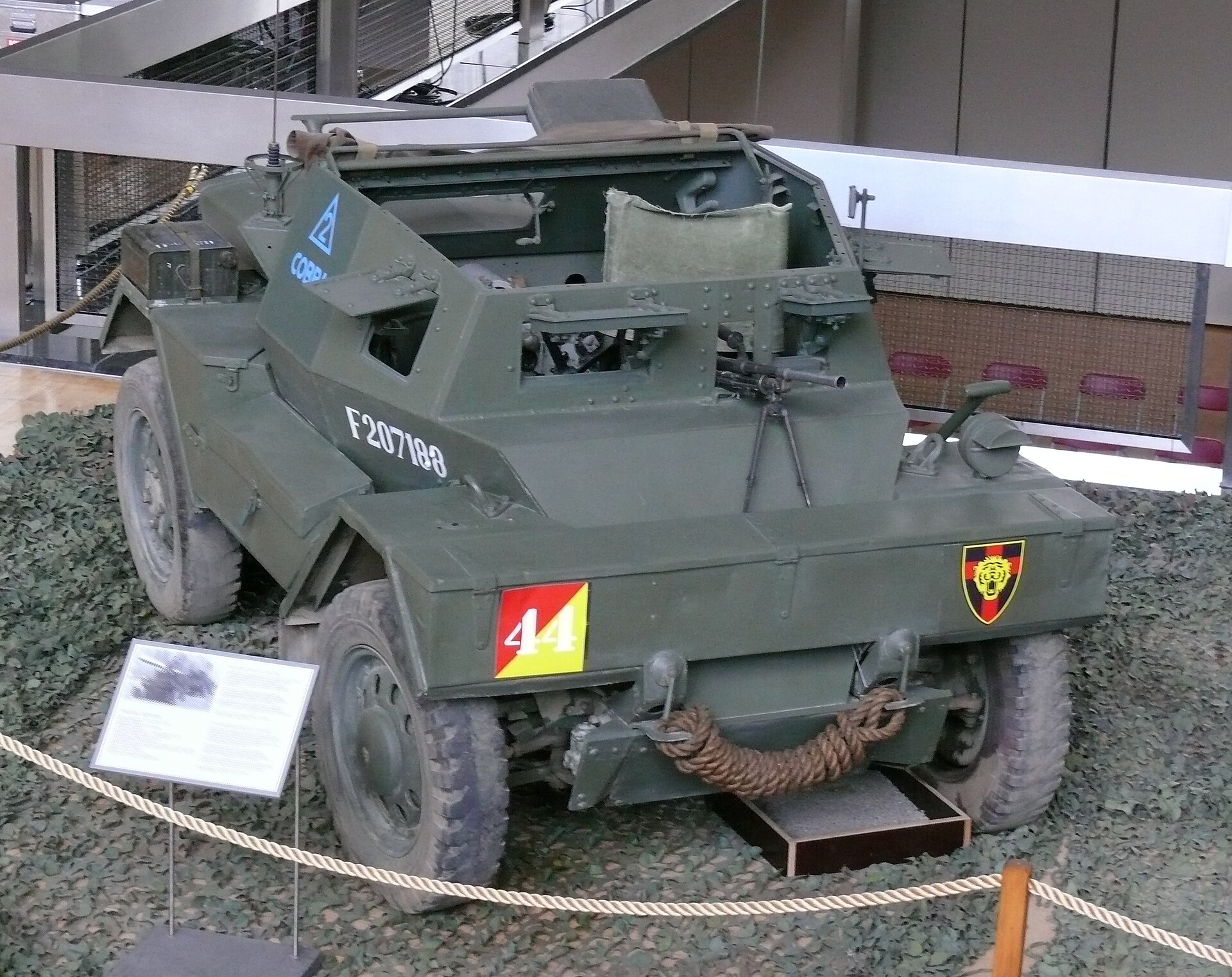
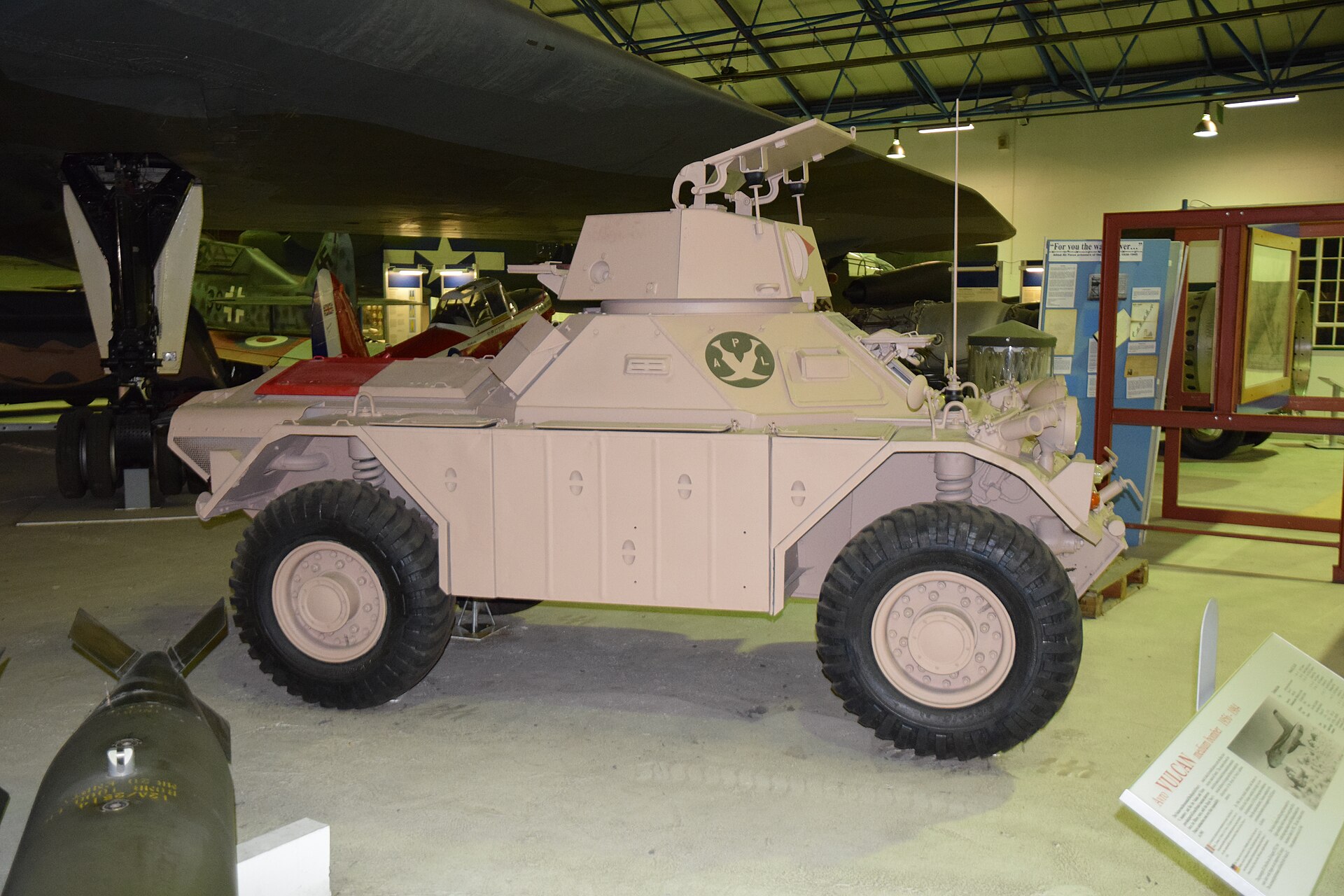
The British Army’s scout car: 6,626 built between 1939 and 1945, 2.8 long tons on a 1.98 m wheelbase, with a rear-mounted 2.5-litre Daimler six of 55 hp, a fluid flywheel and a preselector gearbox giving five speeds in both directions, independent coil suspension and 30 mm of frontal armour. Two crew, 55 mph, 200 miles.
MODEL LINEDingoBUILT BYThe Daimler Company, CoventryPRODUCED1939–45PRODUCTION6,626LAYOUT4 wheels · 78″
The record
The Dingo’s H-drive let the early marks steer on all four wheels, which cut the turning circle to 23 feet; drivers found it hard to handle at speed and it was dropped on the Mk II, taking the circle out to 38 feet. It served through the Second World War and on in Malaya, Cyprus and Vietnam until 1974 — no replacement was thought necessary until the Ferret arrived in 1952. Ford of Canada built 3,255 as the Lynx between 1942 and 1945.
ENGINE2.5-litre Daimler petrol six, 55 hp, fluid flywheel and preselector gearboxDaimler 2.5-litre six
PRODUCTION RUN6,626
COUNTRY OF ORIGINUnited Kingdom
STATUSout of production; in service to 1974
RECORD KINDBase model
MODEL LINEDingo
FAMILYDingo
WHEELS4
NOMINAL WHEELBASE78″
BODY STYLEScout car
VARIANTS1
Catalogue fields describe the vehicle's structure and body as this registry records it. They are not certified factory measurements, and no performance figures are published here.
Body styles & colours
Factory colours
Deep Bronze Green
Light Stone
Codes on hover. Hex values are representative approximations of period paint unless a source states a measured value.