The expedition
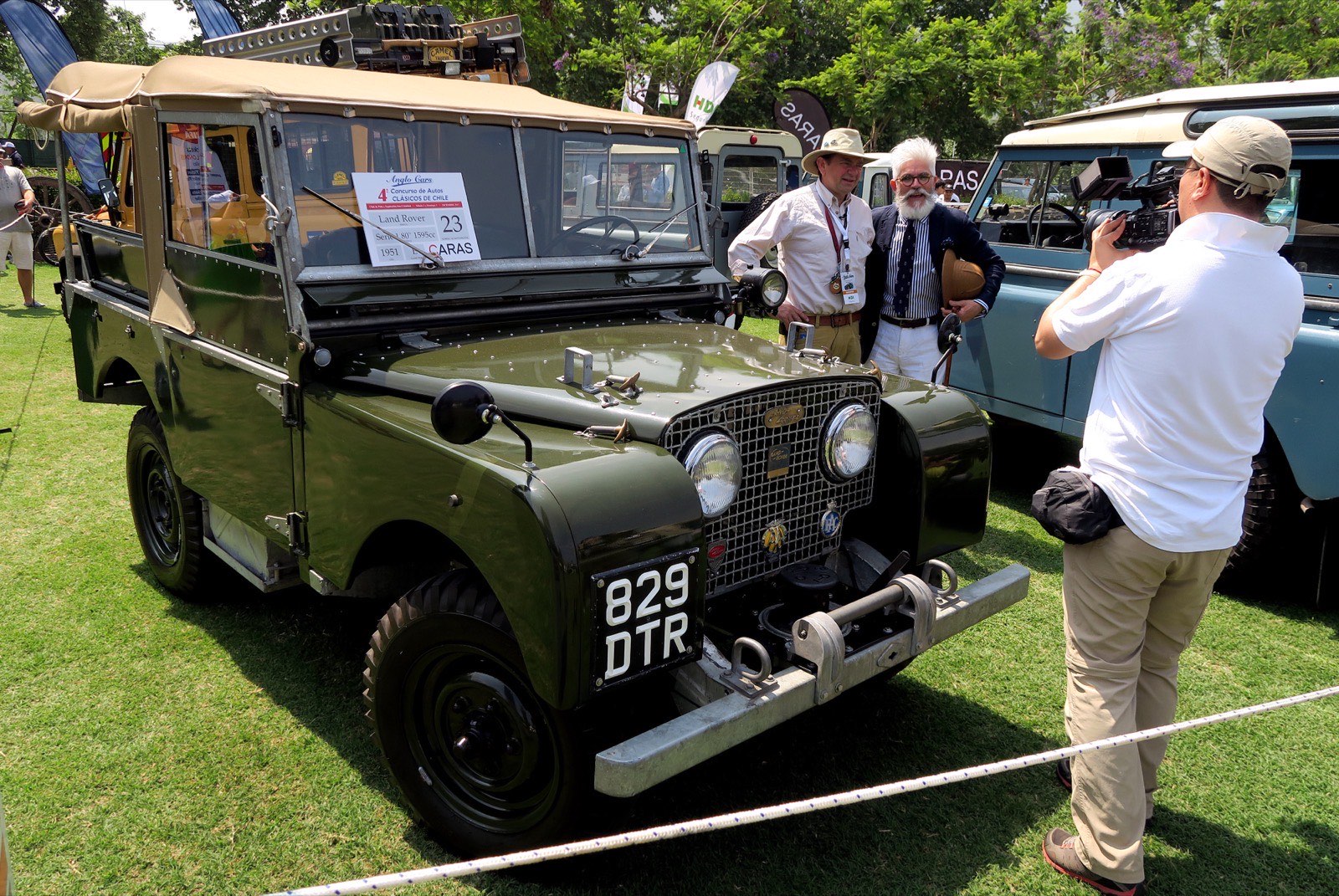
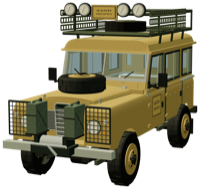
The Land Rover was three years old in 1951 and its reputation as a long-distance vehicle was still being made. That spring W. P. Mitchell, writing for The Autocar, and a co-driver, Jimmy Mandle, took one lent by a Calcutta garage and drove it home to Europe. There had been, Mitchell wrote, next to no planning; their only map was a US Air Corps sheet at a scale of one to five million. The car was fitted with a heater and an extra fuel tank which, with jerricans, gave 38 gallons — a range they would need — and it left Calcutta for Delhi on 21 April 1951.
The Grand Trunk Road took them through Benares, Allahabad and Kanpur to Delhi by 24 April. The first real stop was at Loralai in the hills of Pakistani Baluchistan, a thousand miles out. On the desert road into Persia there was no water and no fuel, 106°F at midday and flying jackets needed at night, and the half-dozen inhabitants they saw 'seemed to have come from nowhere'. A sixteen-hour wait for a police permit at Duzdap (Zahedan) and eighty miles of road cut by foot-deep watercourses on the way to Meshed marked the crossing of eastern Persia, which gave the springs and dampers 'about as bad a time as can be imagined'; they were in Tehran by 2 May, where the bank advised them to change their money on the black market — installed in the bank's own main hall. Beyond Tabriz an unplanned detour took them within three miles of the Soviet border at Julfa, and hill roads at night in thunderstorms led to Khoy on the Turkish frontier. In Turkey the roads were good and everyone friendly; the first real green since India appeared, and at Istanbul, reached by ferry across the Bosphorus, the clock showed 6,273 miles and the engine had used a pint and a half of oil.
Greece from the frontier at Orestiada was memorably rough. On a mountain a Greek corporal borrowed a rifle to arrest them, and a guard with a dismantled Sten gun escorted them over an unused road to the Yugoslav border at Idomeni. Once inside Yugoslavia the road to Belgrade was fast and from Belgrade to Zagreb they averaged 46 mph. On 14 May they touched three countries — Yugoslavia, a corner of Italy and Austria — using low ratio on the mountain roads; a pass from the US authorities at Salzburg let them go on to Munich, and, the strain now telling and helped along by benzedrine, they came through Metz and Lille to Calais. Fifty miles short of the port the trip's only puncture, and only mechanical trouble, occurred. They reached Calais on 17 May 1951 with 8,825 miles on the clock, having stopped properly only for customs and four pleasant hours in Salzburg; fuel consumption had been between 21 and 27 mpg according to cruising speed, and the Land Rover had used less than a gallon of water.
Mitchell's account, 'Land-Roving from India', appeared in The Autocar on 14 September 1951 and was reprinted by the magazine in 2016 as the Defender went out of production. It is cited in histories of Land Rover expeditions as the drive that showed, with a single puncture in 8,800 miles, what the early 80-inch could do. What became of the Calcutta garage's Land Rover is not recorded.